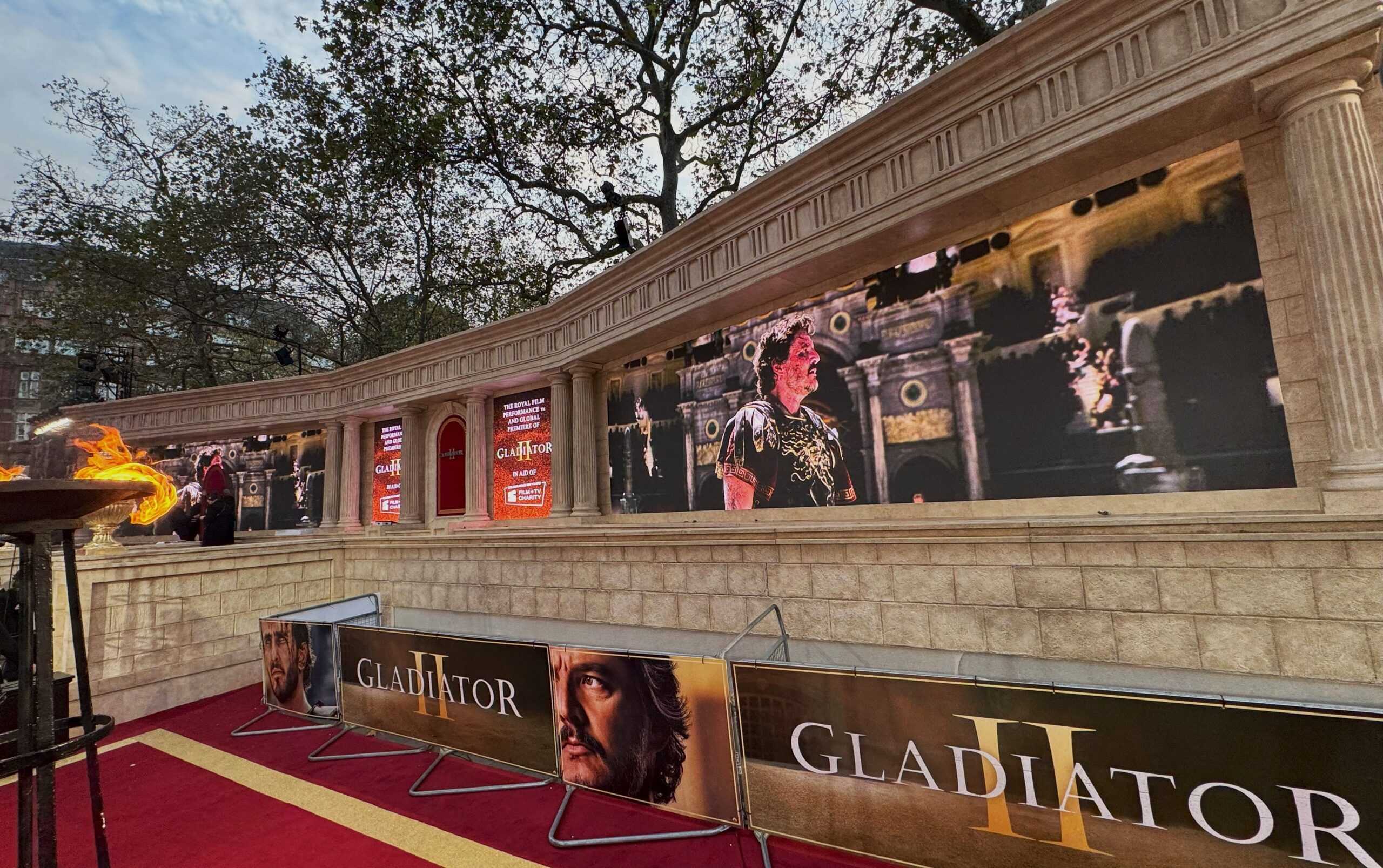
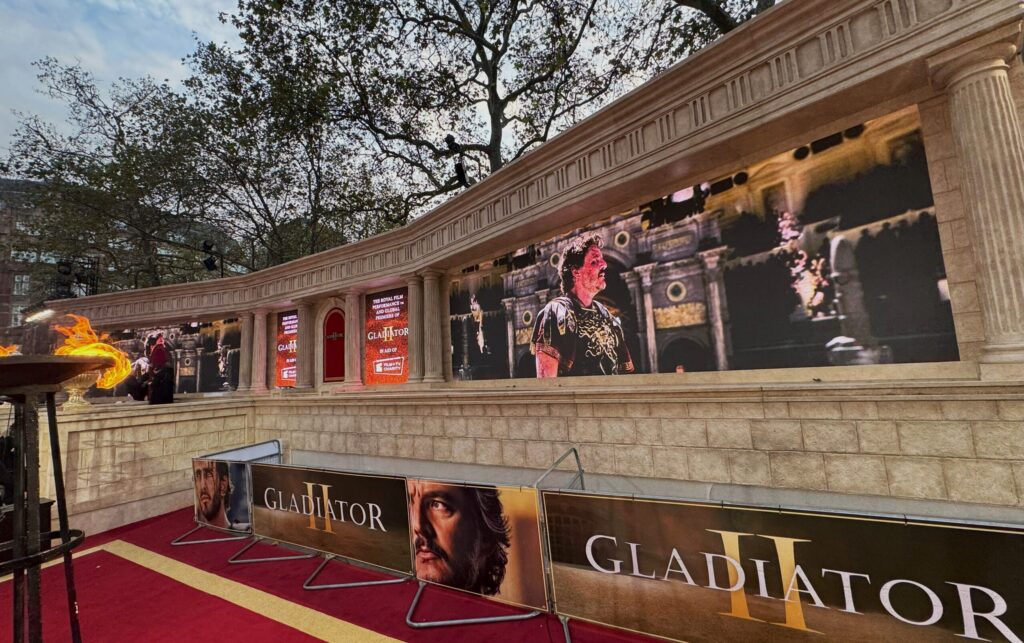
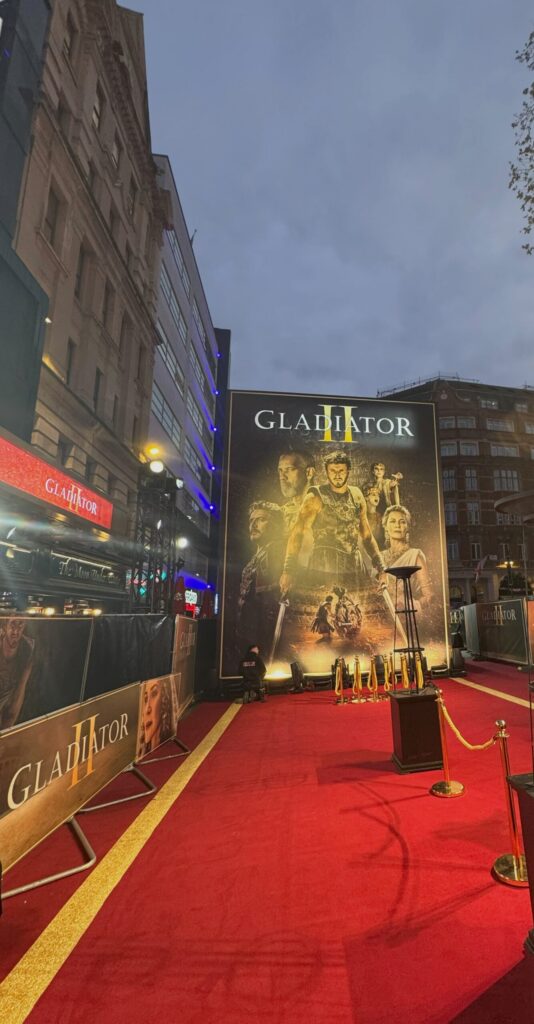
LONDON – Sometime around the start of the second century, in the spot where The Guildhall now stands, the Romans completed a coliseum which housed chariot racers and, yes, gladiators. On 13 November, a bit of this ancient grandeur (happily without actual gladiatorial combat!) returned to London, as the city hosted the long-awaited premiere of Ridley Scott’s Gladiator 2 at Leicester Square, complete with set pieces inspired by Roman architecture.
The setting, created by Limited Edition Event design, welcomed a glittering array of guests, including the film’s director and stars, along with none other than King Charles, himself. Contributing to the glamorous and festive tone of the event was a lighting design by Richard Godin that was run on a Chamsys MagicQ MQ250M desk, anchored by a mighty legion of CHAUVET Professional LED video panels, all supplied by Milton Keynes-based IPS .
At the heart of the design were 132 REM 3IP LED screens that ran along the length of the Romanesque set pieces that flanked the red carpet area. Framed on either side by “Roman columns,” the bright (4,500 NITS) indoor/outdoor panels displayed images from the film. Their DCI-P3 color gamut made it possible to use a broader range of hues, while its 3.9mm pitch ensure crystal clear images.
“The Chauvet REM 3IP LEDScreen in this project looked superb,” said James Mason of IPS, who added that five OnAir IP panels were also used at the premiere, lighting the star-studded event’s busy interview area. Other CHAUVET Professional fixtures that helped make this global career shine included six Ovation Reve E-3 Profiles and 36 WELL Fit uplighters.
Like the film itself, the global premiere of Gladiator 2 enjoyed rave reviews on that November night. The 72nd Royal Film Performance™ by the charity in its 100-year history, the event not only raised money for a good cause, but it also provided all involved with what one news reporter called “a hot to trot” good time. Indeed, the premiere just might have been one of the more notable gladiatorial events to happen in London in about 19 centuries or so.
LONDON – Sure, fortune is fickle, but sometimes lady luck has a way of quietly handing out subtle, unexpected treasures, especially to those with an eye for such elusive opportunities.
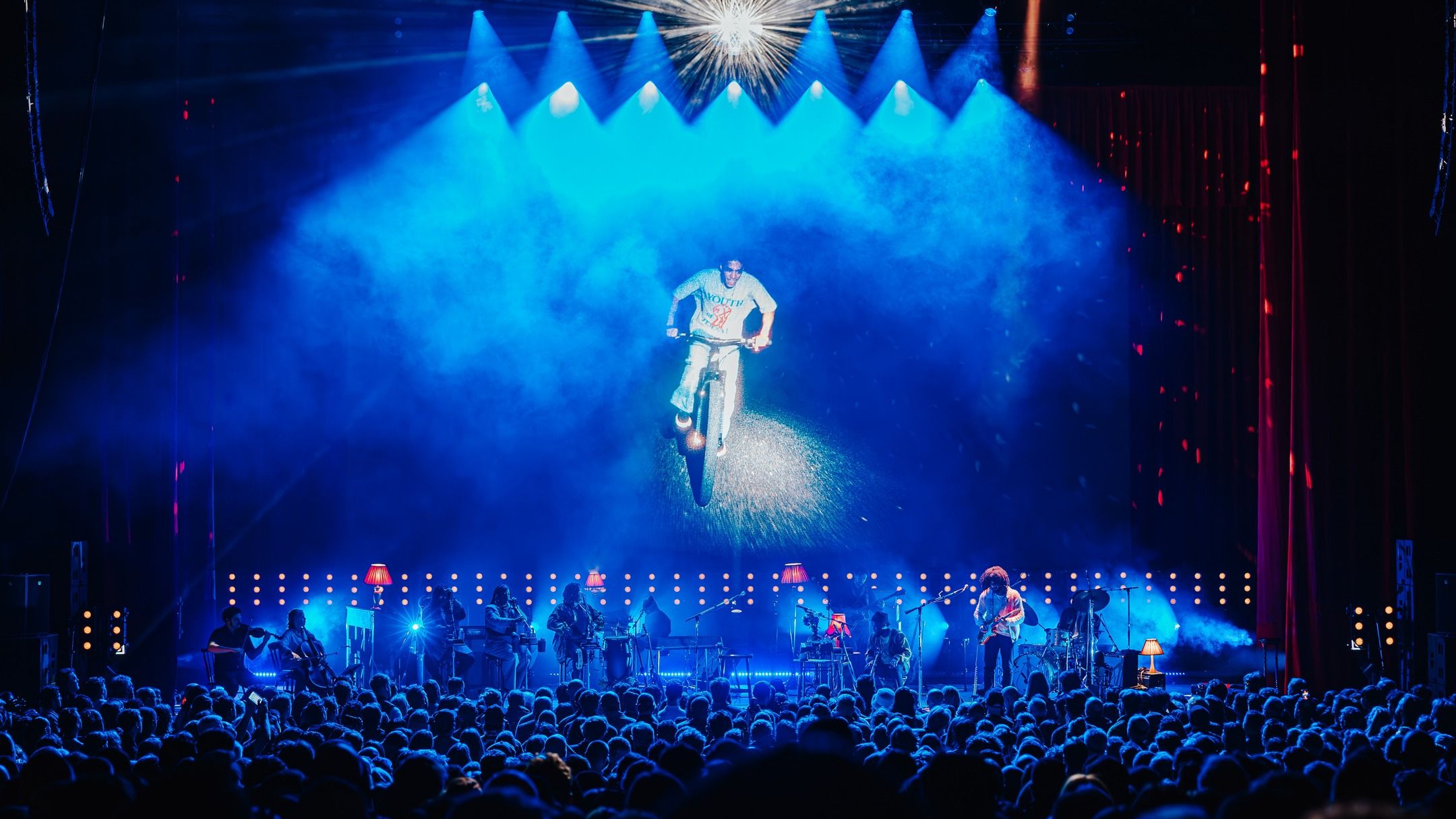
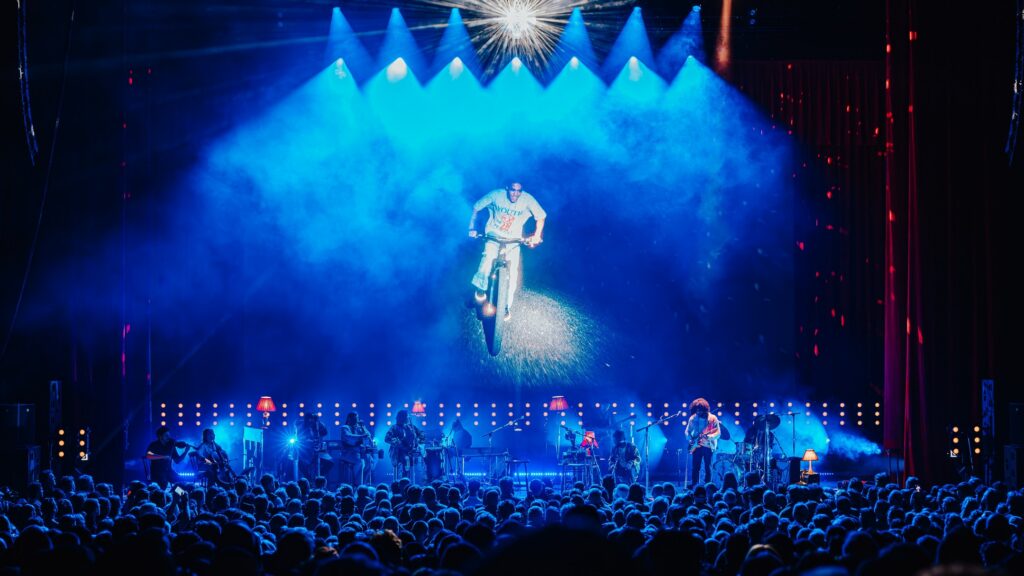
Widely acclaimed lighting designer, Ed Warren certainly falls into that category. He noticed the way light hit a mirror ball over his video wall and drape backdrop when rehearsing for Michael Kiwanuka’s recently completed Small Changes tour. A startling discovery? No, but it opened the door to a powerful creative opportunity.
“It was a happy accident,” said Warren “When we ran through things in rehearsals, I decided to hit the mirror ball with a single spot from below, wash out some blue light, add a bit of haze, and it worked perfectly — of course with the help of incredible visuals from my video designer Ed Hoare. We came up with a look that made it seem as if a single plume of smoke was rising up the backdrop. It really was a magical moment, everyone just stood there with their jaw on the floor.”
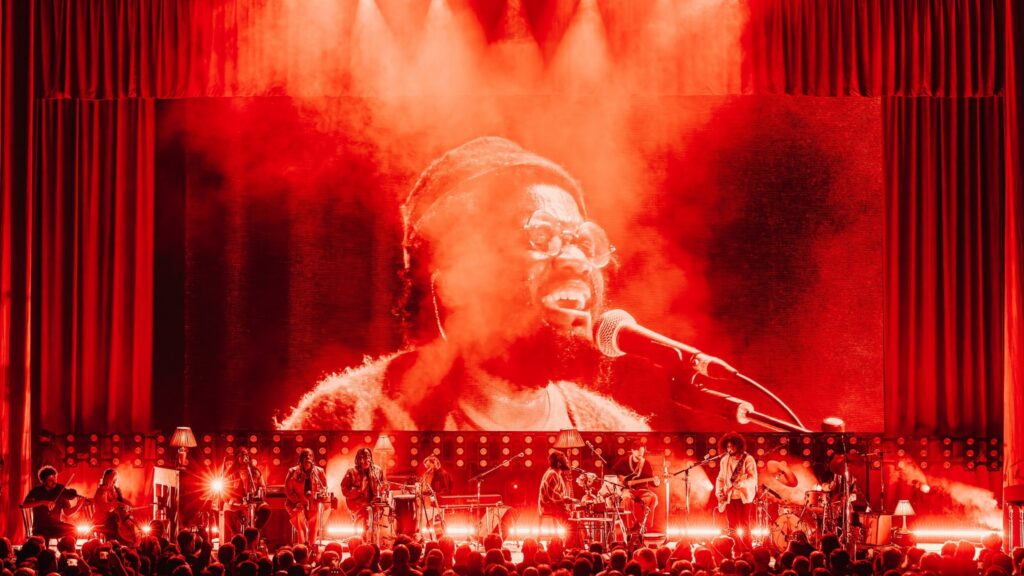
That particular look was just one of many nuances that Warren called upon to set a deeply evocative aura on stage for his Grammy and Brit Award nominated client’s very moving and emotionally reflective show. There was a captivating pensive and contemplative quality to Kiwanuka’s performance on this tour, and Warren’s delicate, uncluttered blend of video and light created an ideal setting for it to play out on.
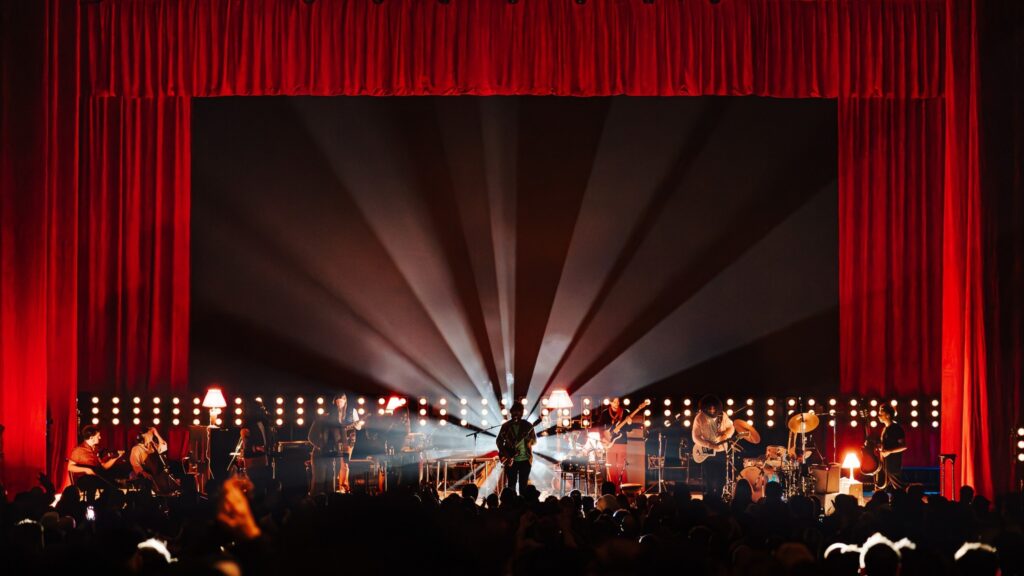
“This tour is a kind of continuation — but also a revamp — of the last tour we had,” said Warren. “I completely reprogrammed most of the songs, and changed a lot about the way the show was structured light-wise. We stripped it right back, removed almost all the colour, only introduced haze halfway through the show, and kept everything super simple. I would describe the looks as a 1960s recording studio/concert experience. There was minimal production, but when it was done, it was super effective and efficient. We let the music do most of the talking!”
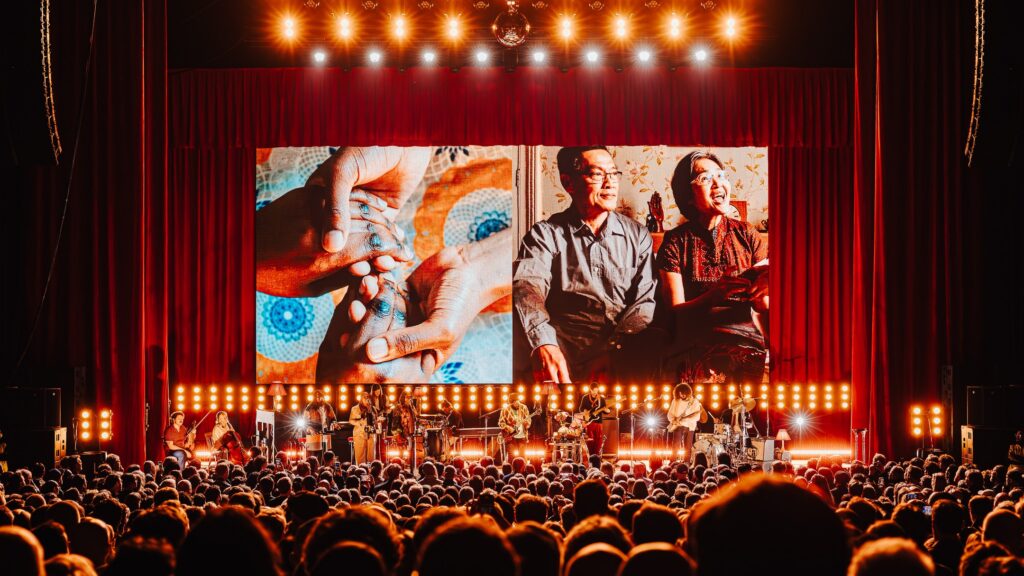
Laying a visual foundation for this design was a collection of 174 CHAUVET Professional STRIKE 1 Array fixtures supplied by GLS. Arranged along the back of the stage and on either side, the fixtures were used to provide a distinct linear look that anchored the rest of the stage’s lighting and the redolent images on its 40’ x 30’ video wall, (The wall itself was bordered on the top and sides by 8’ wide drapes to provide an extra element of warmth to the stage.)
“The STRIKE fixtures gave us a warm backlight, sitting nicely between the screen and the floor and acting as a beautiful warm strip that held the stage together nicely,” said Warren, who notes that the show was run on a ChamSys MagicQ MQ500M Stadium Console.
Warren praised operator Franki McDade for running the show seamlessly throughout the tour. “She has done an excellent job on this and other tours we’ve done,” said Warren. “We are lucky to have her.”
Luck? Yes, but as Ed Warren demonstrated during rehearsals for this tour, luck always seems to shine more brightly when one is inspired.
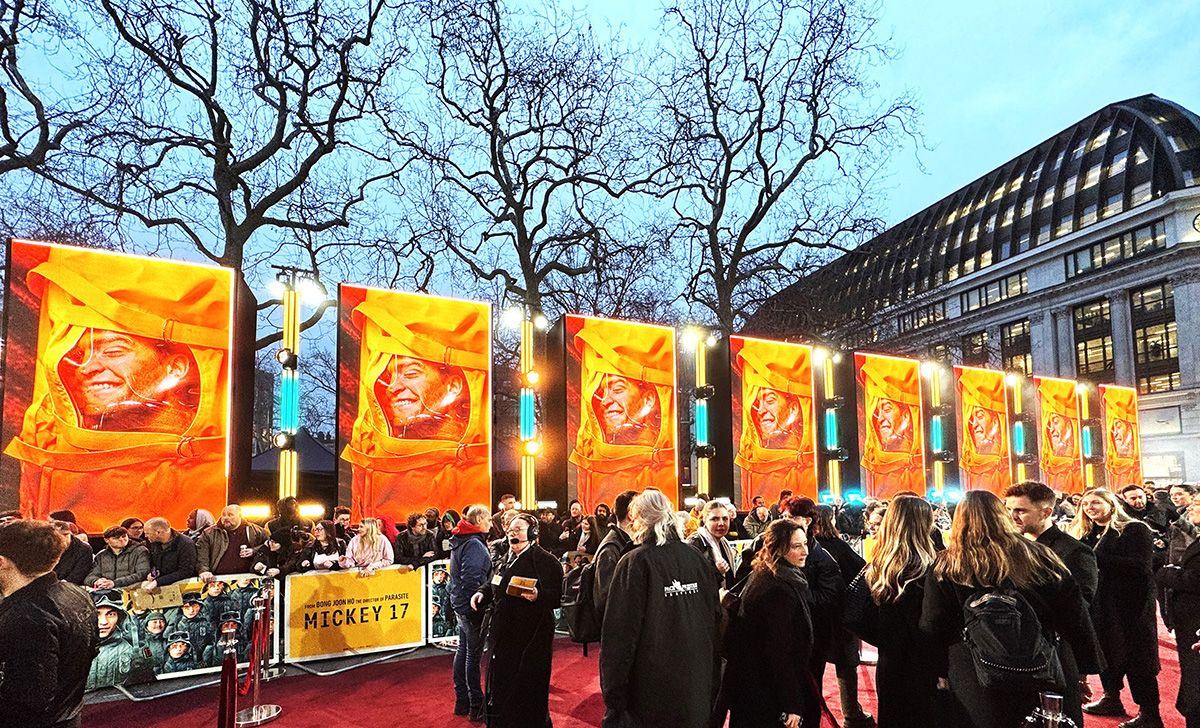
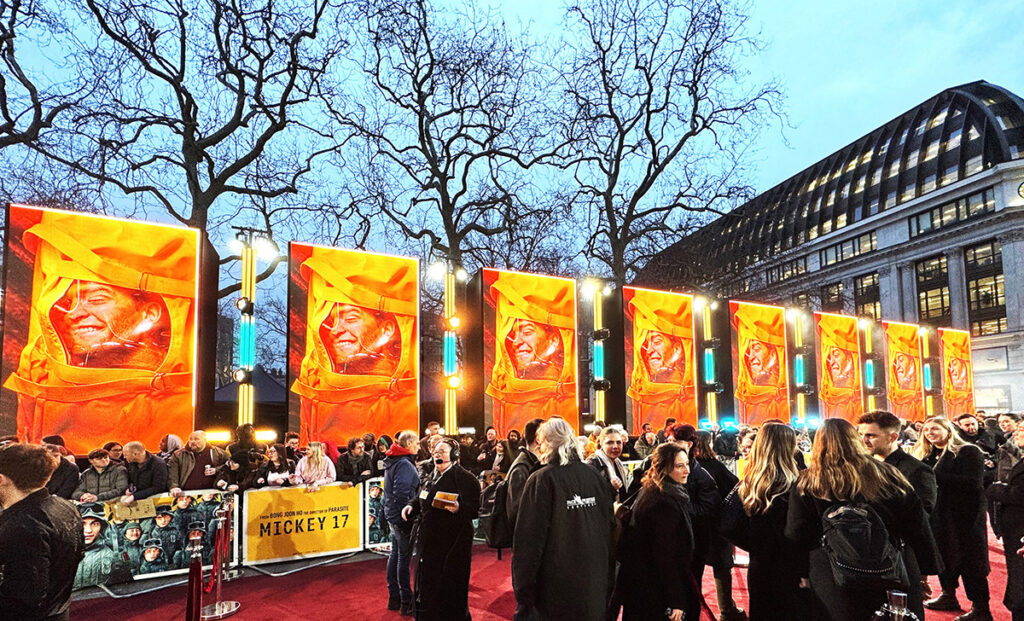
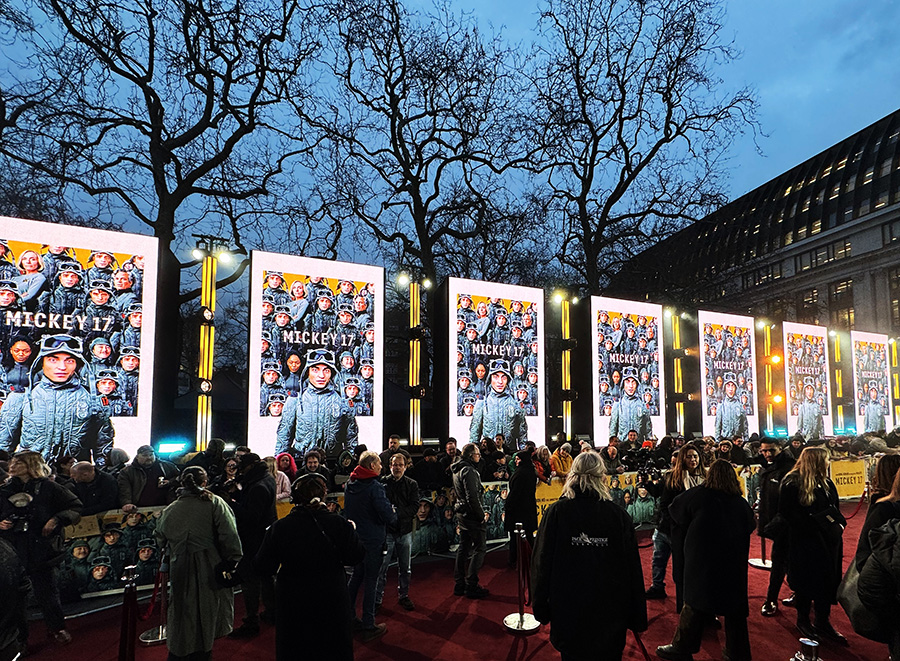
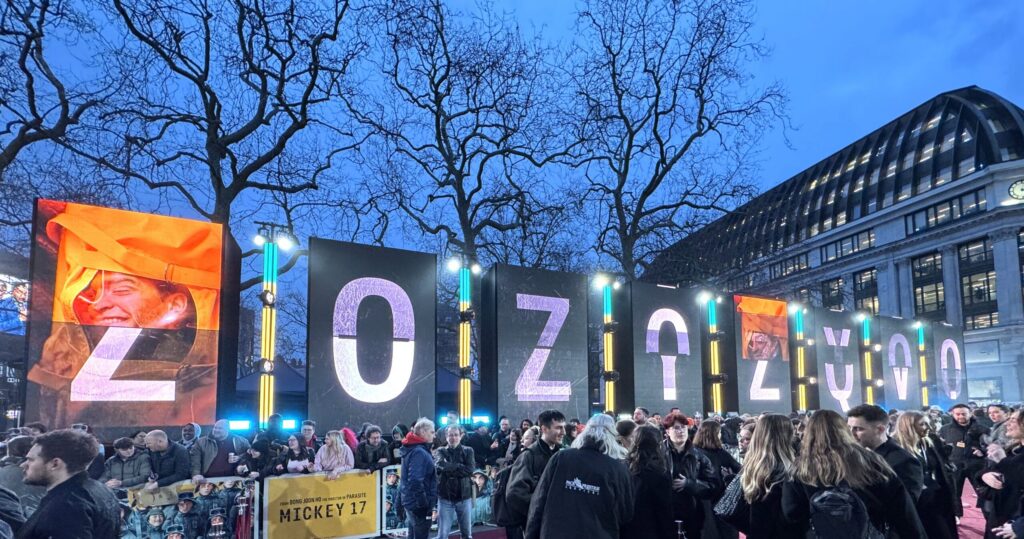
LONDON – Academy Award winning director Bong Joon Ho tells interviewers that his latest film, “Mickey 17” a futuristic dystopian tale about an intrepid journey made by “expendable” beings to colonize a distant ice planet, is, at its core, an exploration into the “human condition.” Fascinated by his gripping work, critics infer different meanings from the film’s message, which is, at turns, serious and comic, but there was no doubt in anyone’s mind about the “condition” of the large crowd of humans who attended the film’s premiere at Leicester Square – it was pure joy!
Really, there was no way it could have been anything else! Fans got to see Bong and the Mickey 17’s nattily dressed stars Robert Pattinson and Naomi Ackie in an elegant setting, not to mention a parade of “drones” from the film marching down the red carpet, while also enjoying lively video clips shown on a 32m long structure featuring 160 active CHAUVET Profession REM 3IP LED panels.
Created by Limited Edition Event Design, the gala evening immersed fans in a celebratory atmosphere worthy of a major premiere, in addition to conveying an engaging sense of the film itself. Milton Keynes-based IPS, supplied and installed the premiere’s video panels as well as its lighting kit, which included 14 Color STRIKE Mfixtures, positioned in pairs at the bottom of each of the seven light towers that interspliced the video wall. Each of the screens along the red-carpet walkway wall measured 2.5m wide by 4m high. The custom content they displayed was played back via a media server.
Lighting designer Richard Godin skillfully ran the lighting and video on his ChamSys MagicQ MQ250M Stadium Console to create the evening’s engaging atmosphere. His well-timed strobes and colour effects that matched the film’s imagery contributed to the overall sense of excitement that marked the affair.
As is the case with any event that takes place in Leicester Square, the Mickey 17 premiere had its share of challenges. Load-in and tear down schedules had to be arranged carefully to meet time and space restrictions. And the structure for the video panels had to be constructed to account for the sloping surface of the area. Project Manager James Mason and LED Technician Dan Ainsley from IPS were more than up to the task of meeting these challenges, leading a dedicated team of colleagues, they helped the premiere come off without a hitch, ensuring that the “human condition” on this London evening was indeed a happy one.
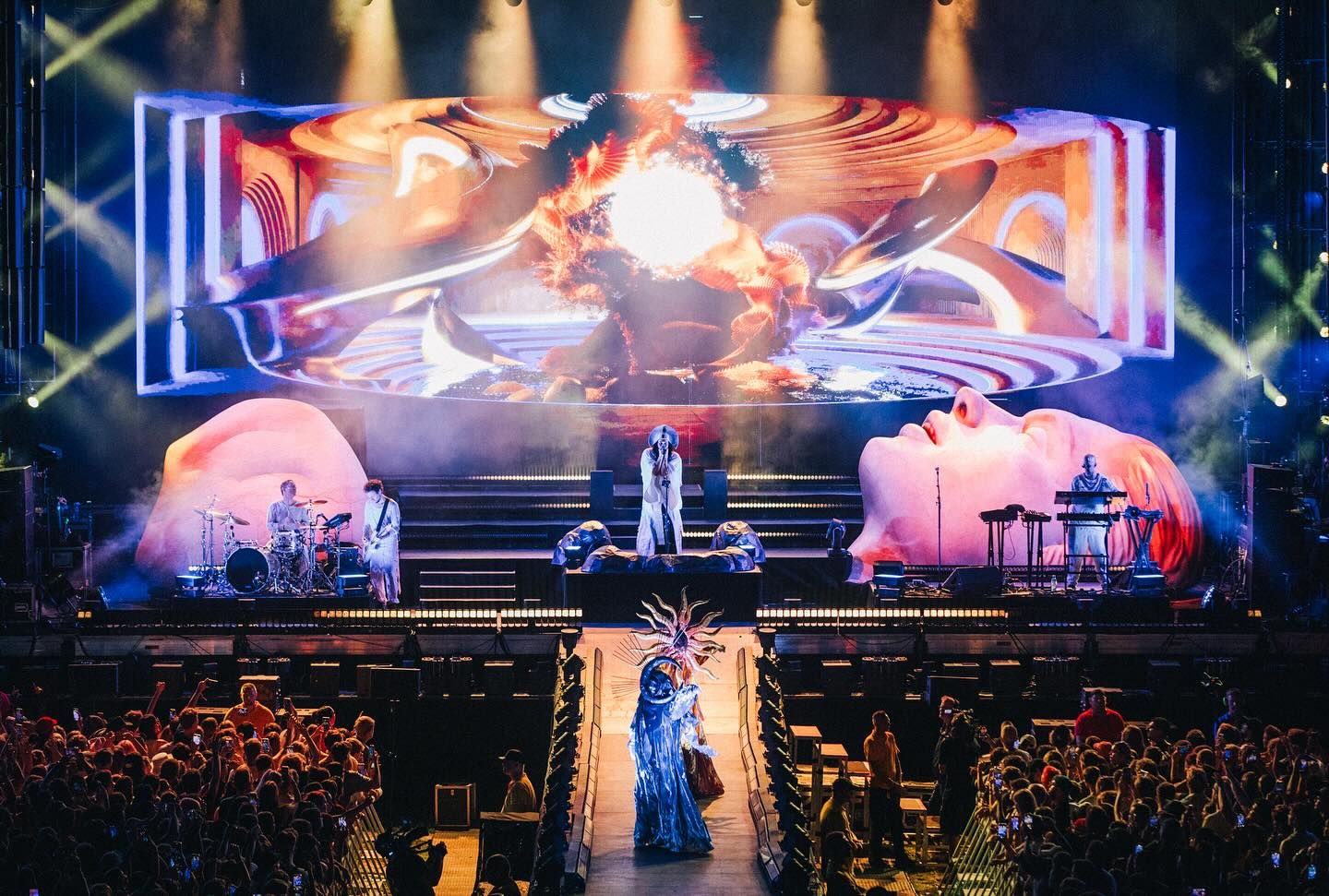
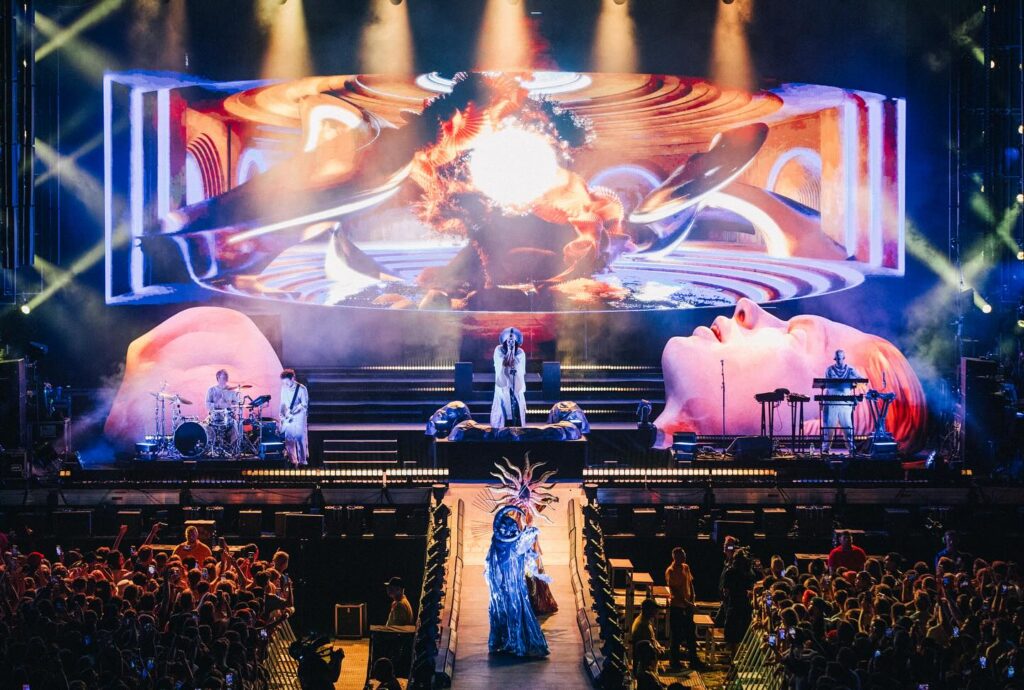
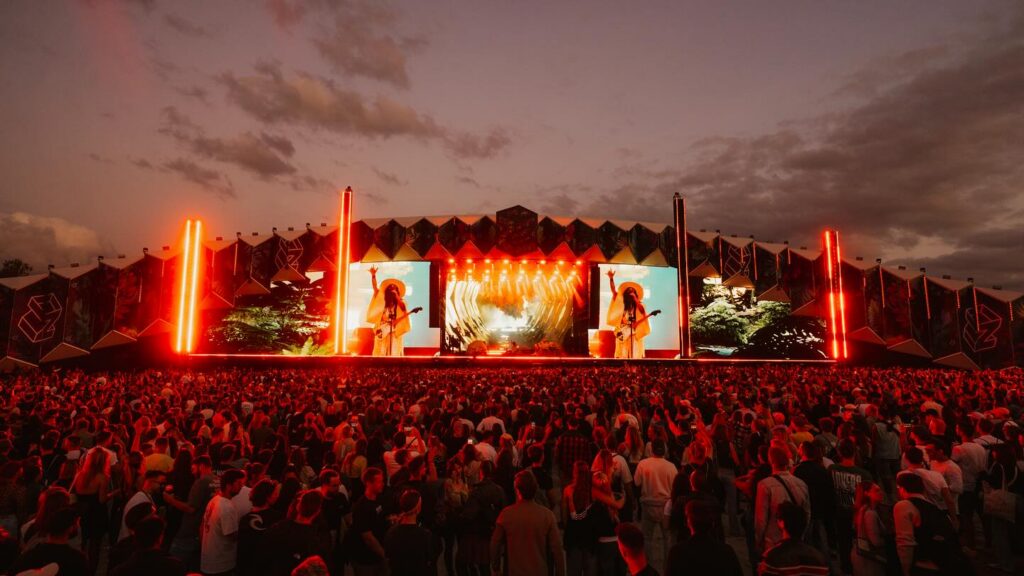
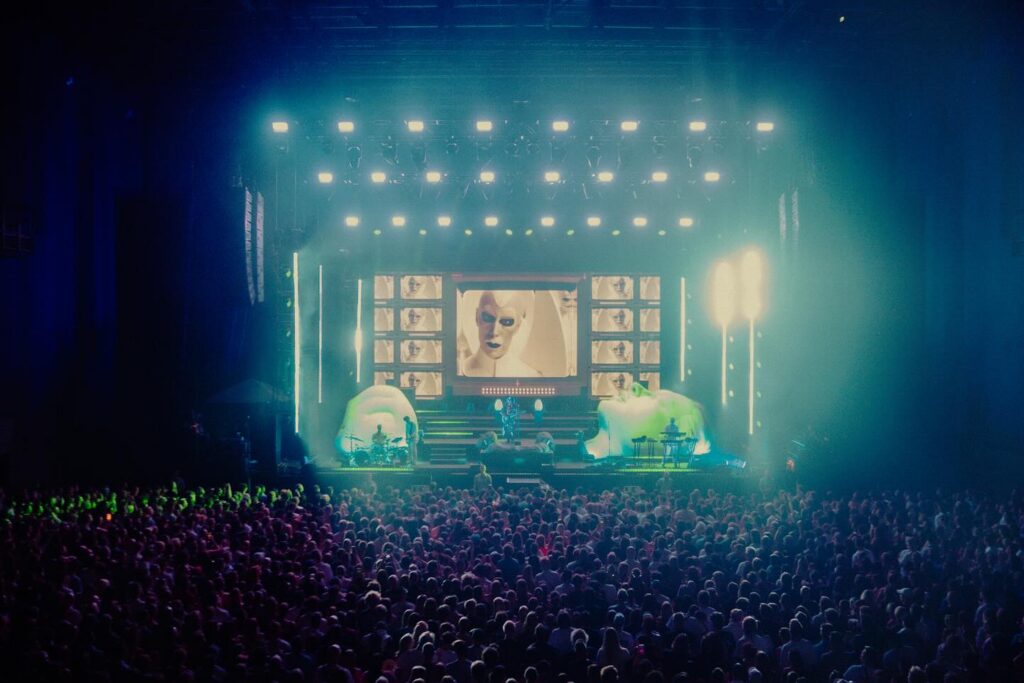
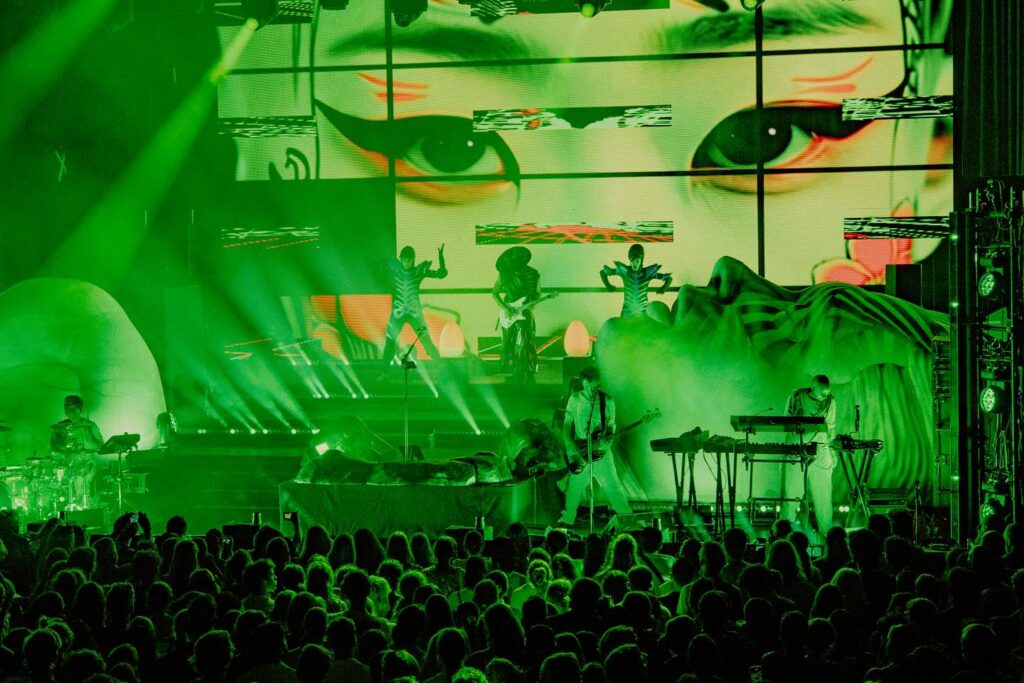
ISTANBUL – Every night, fans of Empire of the Sun, affectionately known as Empyreans wait in line to see the Australian duo’s Ask That God tour. Many follow the band from city to city. And why not? Attending this richly nuanced and incredibly diverse show time after time never gets boring. It’s like looking at the starry sky night after night — always different, always timeless, always transporting you to a universe of fantasy and imagination.
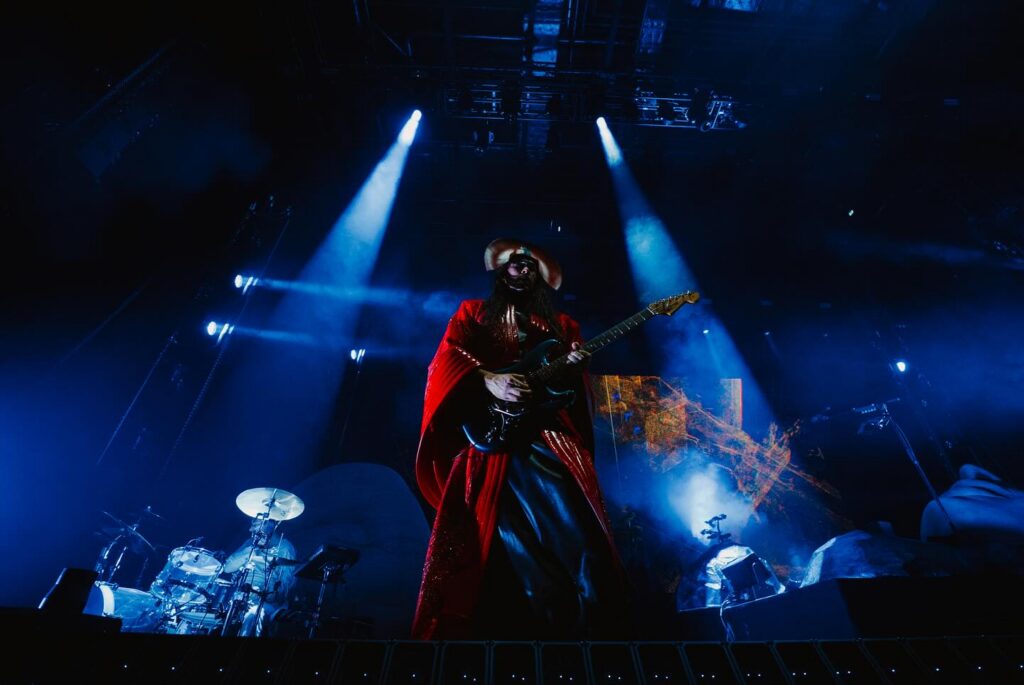
Less of a traditional concert, and more like an experience where sci-fi mysticism slams into concert energy, Ask That God blazes its own path in every possible way. Describing this four-act show with its mix of theatre, costume changes, cinematic video, soft intimacy, and thunderous musical blend of EDM, synth-pop, New Wave and various forms of rock is often difficult for fans to do in a single sentence.
Imagine, then trying to light this panoramic production!
Oliver “Olly” Suckling was more than up to the task on the long-awaited EU leg of the Ask That God tour, which concluded August 30 at Bonus Parkorman in Istanbul, after beginning July 23 at Sagres Campo Pequeno in Lisbon, with stops in Spain, Italy, The Netherlands, Germany, The UK, Poland, The Czech Republic, France, Belgium and other countries along the way.
After designing the show, Suckling skillfully ran it on a rig supplied by Lights Control Rigging (LCR), using two ChamSys MagicQ MQ500M Stadium Consoles. Throughout the show, he navigated his way brilliantly through its multifarious facets, always maintaining looks that were as fresh and vibrant as his client’s music.
“It was important to follow the style and pace of the music,” said Suckling. “This is a very theatrical show that ranges from intimate moments to full rock out moments, heading all the way to all out rave moments. The lighting looks we created aimed to support this quality, whilst also keeping it dark, moody and mysterious.”
Suckling relied on 14 CHAUVET Professional COLORado PXL Curve 12 motorized battens, positioned along the front edge of the stage to evoke the range of moods he was seeking to convey. Drawing on the fixture’s 12 independently controllable moving heads with their wide (5.7° to 36.3°) zoom range, he created a variety of supportive looks that fit every moment.
Explaining his choice of the fixture, Sucking said: “We needed a batten type pixel fixture that would add a punch to the front edge of the stage but also be able to stand strong against all the other fixtures we had on stage. We needed to make the single line of them stand on their own. We also needed the added feature of being waterproof due to half our shows being at outdoor festivals.”
In the end, Suckling used his rig to contribute mightily to a tour that one critic said, “is as much a visual experience as a musical one.” It was also an experience that, as all Empyreans know, never ceased to excite and amaze.
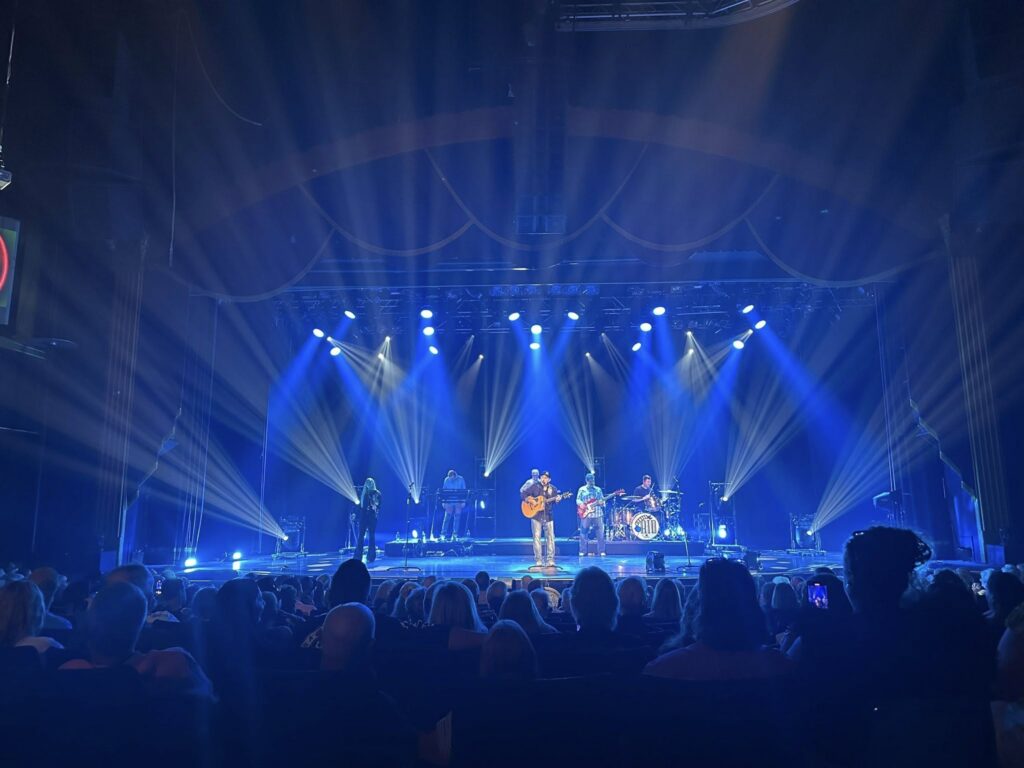
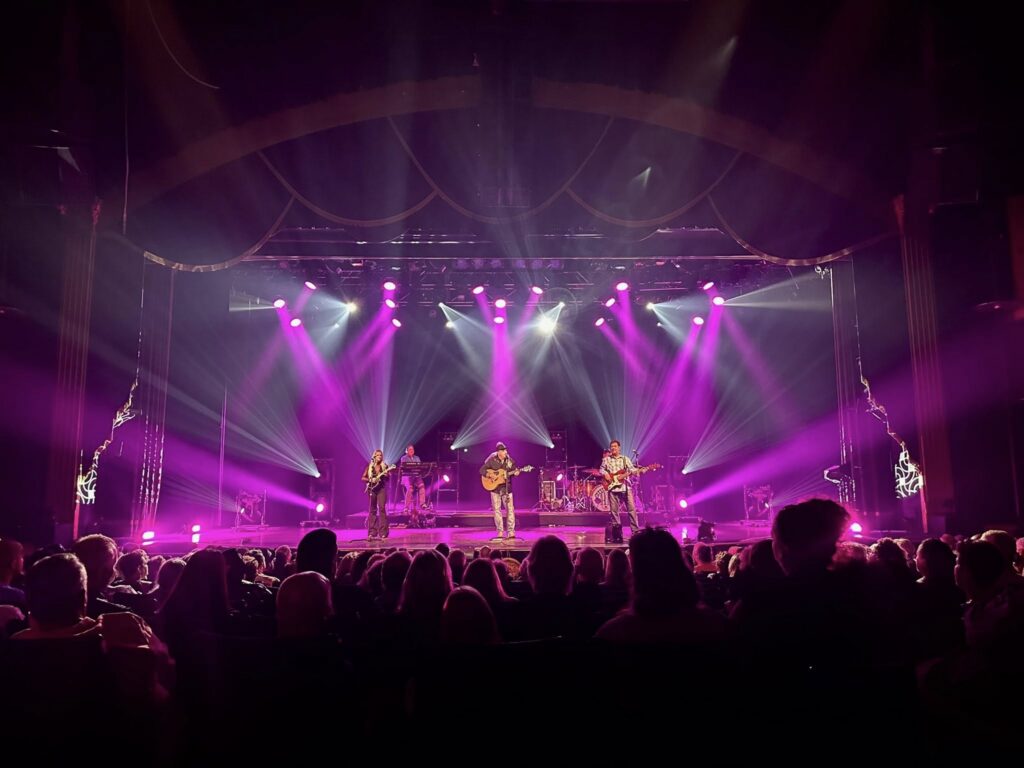
NASHVILLE – You don’t win four awards from Country Music Association, two awards from the Academy of Country Music, and a Grammy Award by being a one-dimensional band. So, it’s not surprising that Diamond Rio has touched a lot of musical bases in their storied career.
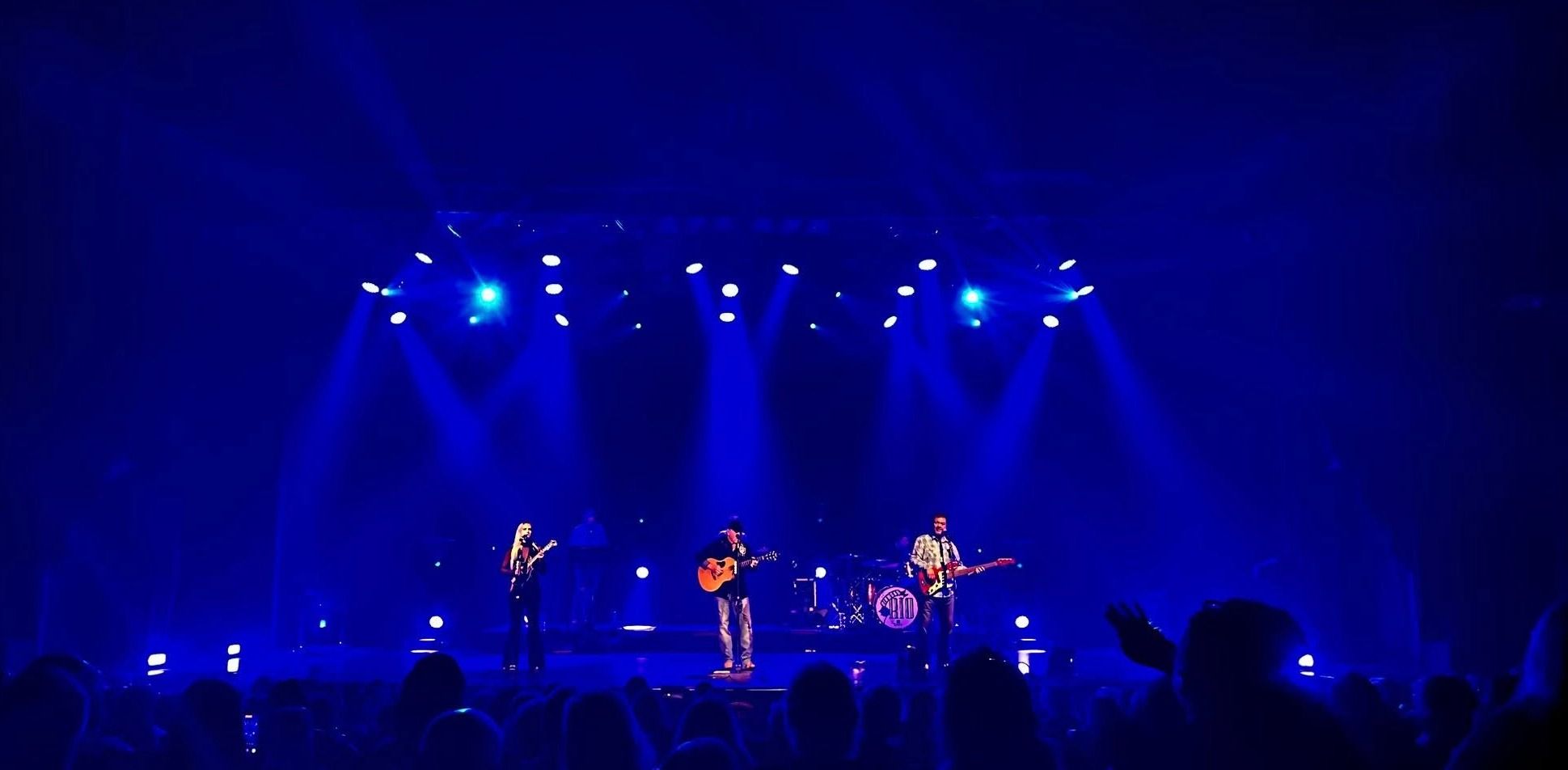
It may be impossible to imagine a single show encompassing the full range of moods the multi-platinum band conveys with their songs, but Diamond Rio is coming pretty close on their 15-city fall tour. Reflecting the scope of the six-piece group’s music with dynamic looks that engage audiences every step of the way is a boldly colored lighting design by Willis Underhill that features a broad selection of CHAUVET Professional fixtures.
Running his show on a ChamSys MagicQ MQ500M+, Underhill of Graffiti Lighting Concepts calls forth a continuously changing stream of colors to reflect the mood of each song. “I like to rely on bold color combinations to help evoke emotion and help create moments between the band and the crowd,” he explained. “I use a lot of reds, whites, yellows, and deep orange for high-energy moments on this tour. For more intimate moments, I lean towards pastels and similar colors.”
Of course, there is much more than a captivating palette that’s engaging Diamond Rio fans, Underhill is keeping his looks fresh by changing light angles and accenting his bold, often monochromatic, color schemes with bright white light accent.
Unleashing the full power of this rig, Underhill is creating looks that are very powerful, but also very approachable, as they flow with his client’s music. He explained that since Diamond Rio is a very upbeat band with an ebullient style, he wanted a lighting rig that could keep pace with the many highpoints in their performance.
“The Maverick Storm 2 Profiles are ideal for this show,” he said. “I rely on them to provide delicate midair breakups to help highlight key moments between the band and the crowd. Then, I use the STRIKE Bolts as sidelight downstage to help frame the sides of the performance area and create depth on stage. I also use them as eye candy to create movement, as well as a strobe for impactful moments when needed.
“I am also able to turn around immediately and utilize the Storm 2 Profiles’ high-output LED engine to help transition to high-energy moments with ease, to engage the crowd. As for the Storm 2 Beam Washes, they help me create both deep, saturated colors and airy pastels. This allows me to transition smoothly from high-energy moments to slow ballads with ease.”
Throughout his show, Underhill is careful to highlight the individual band members, each of whom has a dedicated special spot downstage and upstage in the house lighting rig. He highlights individual performers with this house rig and uses his ground package to direct attention to different areas of the stage at different moments. “I want highlight different band members at key moments, so they all get attention,” he explained.
Given all that this band was done since it started in Nashville in the ‘90s, the attention is very well-deserved.
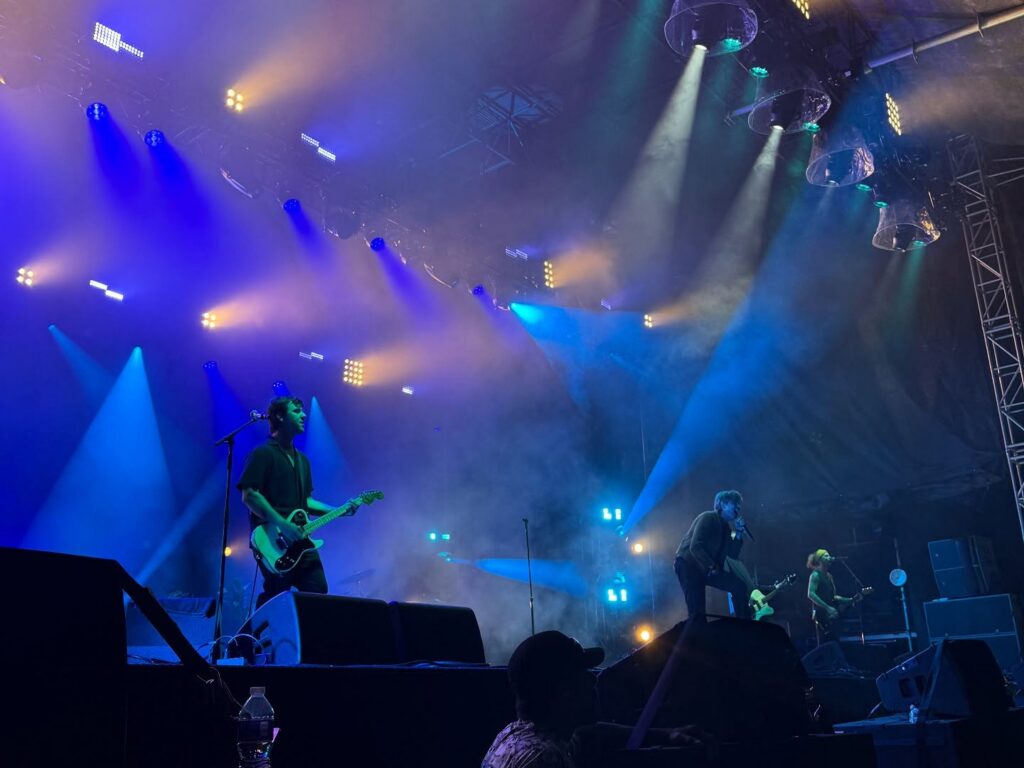
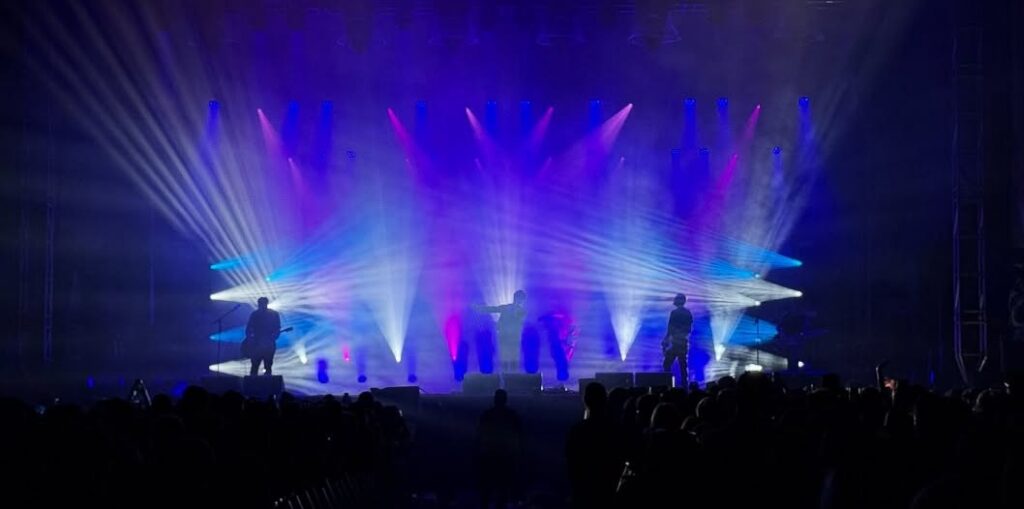
CHICAGO – Silhouettes say a lot without ever revealing too much about themselves… a beguiling quality that makes them so moving in art and drama. Zach Scott is tapping into this power in his captivating design for punk rock icons The Academy Is… on the 12-city fall leg of their Almost Here tour.
Fans got a taste of this enchantment on September 21st when the band kicked off their tour at the 20th annual Chicago Riot Fest. Running his show on a ChamSys MagicQ MQ500M Stadium Console, Scott mixes richly saturated colors, a stark blend of intense brightness and dark space –and some artfully placed silhouettes to captivate attention while supporting his client’s dynamic performance.
“The role of silhouettes, brightness and intensity in this show stems from my deep-rooted programming style of theatrics with impact,” said Scott. “It is heavily influenced by one of my mentors, Gigi Padron. I prefer to use dark space as my dynamic rather than video, and the band was on that exact same thought process.
“This is something that the guys noticed immediately when we first worked together back in 2022, and they wanted to keep on that path with this new show,” continued Scott. “The band absolutely loved the use of silhouettes in that show, so we immediately started discussions on how to use less key wash light and allow light to come from the rig naturally. With the record that the band is touring (Almost Here), the vision was to create texture around the guys without washing it out using DS fixtures. I have six Chauvet Outcast 2X Washes placed on the DS sides of the deck to give a bit of punch to their faces during certain moments, but most of the time these fixtures are used along with the rest of the rig as texture light.”
In addition to the DS side units used, Scott has 12 other Outcast 2X washes in his rig — eight directly in front of his upstage sleds to provided color behind the band, and four in front of the drum riser to serve as mid-stage washes.
Scott relies on his washes to light band members at times during the show. This was no easy task, given that the animated band enjoys moving around on stage. “We have a handful of moments where the guys will stand at their taped marks for certain key light cues,” said Scott. “But for the most part they’re moving around. Six washes at 50-percent output cover them very well.”
The JRLX supplied rig also includes 15 STRIKE P38 90W warm white blinders mounted on deck truss, and eight Rogue R2 Beams on the downstage wings. “My main purpose with the beams was to extend the visual experience as far left and right as possible,” said Scott. “With the larger venues and stages on the tour, I want to ensure that the entire audience is immersed with the same show, even if they can’t be directly in line with the stage.”
Scott created his immersive show without the use of video. “The band and I had contemplated having video involved during our initial talks, however we always made it back to the fact that it was too literal for this show,” he explained. “We wanted all elements to compliment the guys’ performance.”
Another consideration, said Scott, was that video would take away from “the raw feel” that he and the band wanted. That “feel” is so well expressed on this tour by the mystery of silhouettes and the artful interplay of darkness and light.
Saint-Jean-d’Angély, France – Experience, they say, is the best teacher. It is also the surest way to overcome hesitancy and doubt. Just ask Marc Brissonnet.
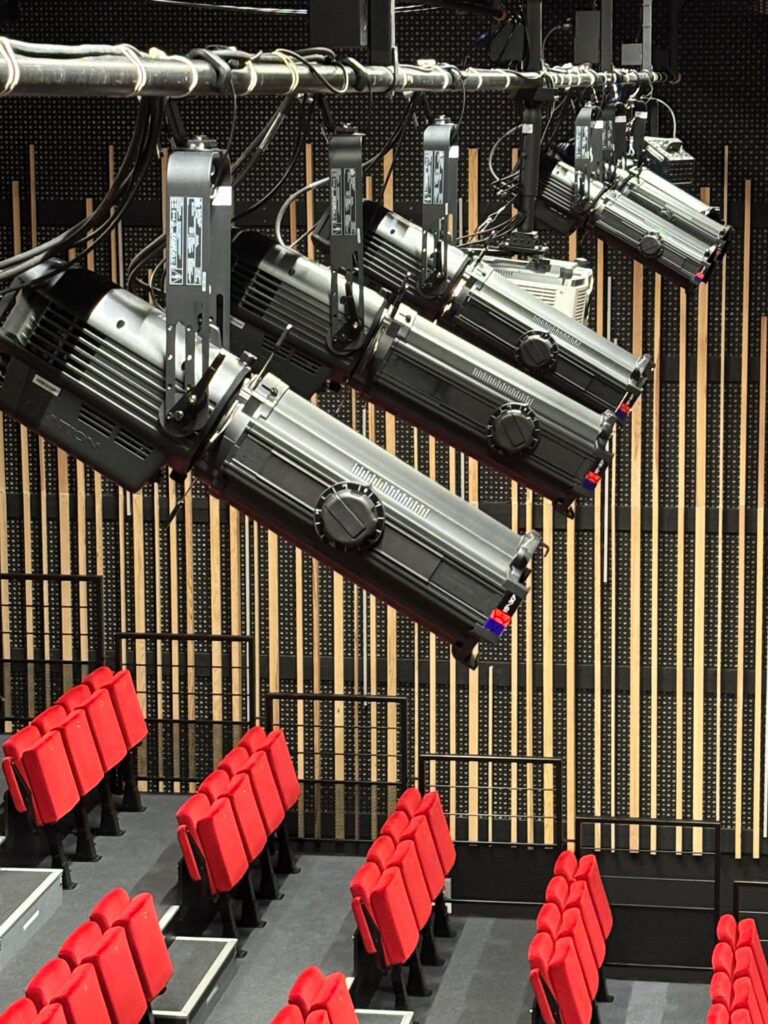
The Technical Director of the venue, Brissonnet led the way in the initiative to convert it to an all LED system, inaugurated in 2018 by the City of Saint-Jean-d’Angély. The actual process started in late 2024 when the theatre installed eight Ovation Rêve E-3color rendering ellipsoidal fixtures and ten Ovation Rêve F-3 color rendering Fresnels from CHAUVET Professional.
As a multi-disciplinary house, the performance venue hosts a wide variety of different types of productions, and Marc acknowledges that initially some touring companies were hesitant to perform under LED lights. Experience, however, taught them otherwise.
“Some companies came in with preconceived notions—concerns about color rendering, intensity, or beam quality,” said Marc. “But once they saw what the Rêve units could do, most of those doubts disappeared. LED technology has come a long way, and today we’re able to get excellent results across a wide range of applications.
“An example is how the Rêve F-3s offer us all the flexibility we had with traditional fixtures, but with far better color control, consistency, and energy efficiency,” continued Marc. “They’ve made our setups faster and more precise. Honestly, they’re a great replacement.”
Purchasing the Rêve fixtures was on of the steps Marc has taken to convert the venue to an all LED system. This year, l’Eden added six Maverick Storm 2 Profile fixtures and two Rogue Outcast 2X Washes to its house rig.
“The the potential is already clear,” Marc said of the new fixtures. “Having motorized LED fixtures in the venue gives us a lot of creative flexibility. I’m glad that Chauvet offers IP20 fixtures, because IP65 is often unnecessary in venues like ours.”
Prior to embarking on his journey to an all LED system, Marc upgraded the theatre’s lighting capabilities by acquiring a ChamSys MagicQ MQ250M Stadium console. “We needed more universes to control our fixtures, and this console offered the right combination of features and price,” he said. “I had a solid introduction to the system via Rémy Rouvoy, while Victor Faré familiarized us with the lighting fixtures.
“Prisme Éclairage, who handled the integration and provided excellent support throughout the project also deserves a lot of credit,” continued Marc. “And of course, a big thank you to the Ville de Saint-Jean-d’Angély, since as a municipal performance venue, this kind of investment depends heavily on the City’s support.”
The investment is already paying dividends in a multitude of ways. One of which can be felt in the comfort level inside the theatre. Marc notes that there has seen a drop of about 7°C in the venue during the summer, which makes a real difference for both the artists and the audience.
“The space feels less stuffy and more pleasant overall,” he said. “On top of that, the lighting quality is better, and the response from visiting productions has been encouraging … even from those who were initially hesitant about using LED!”
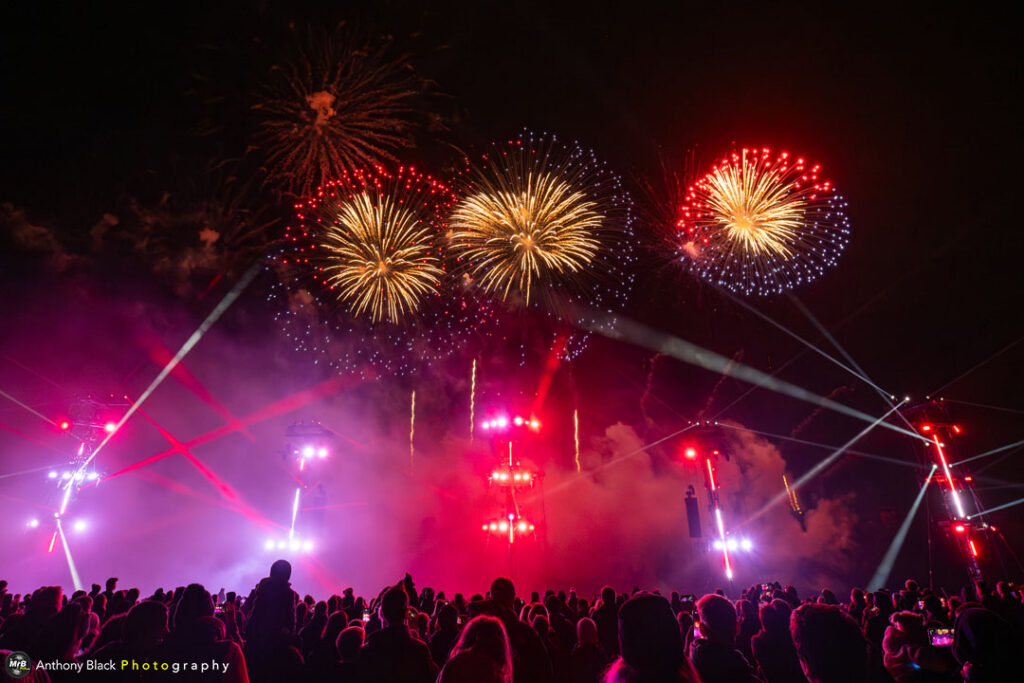
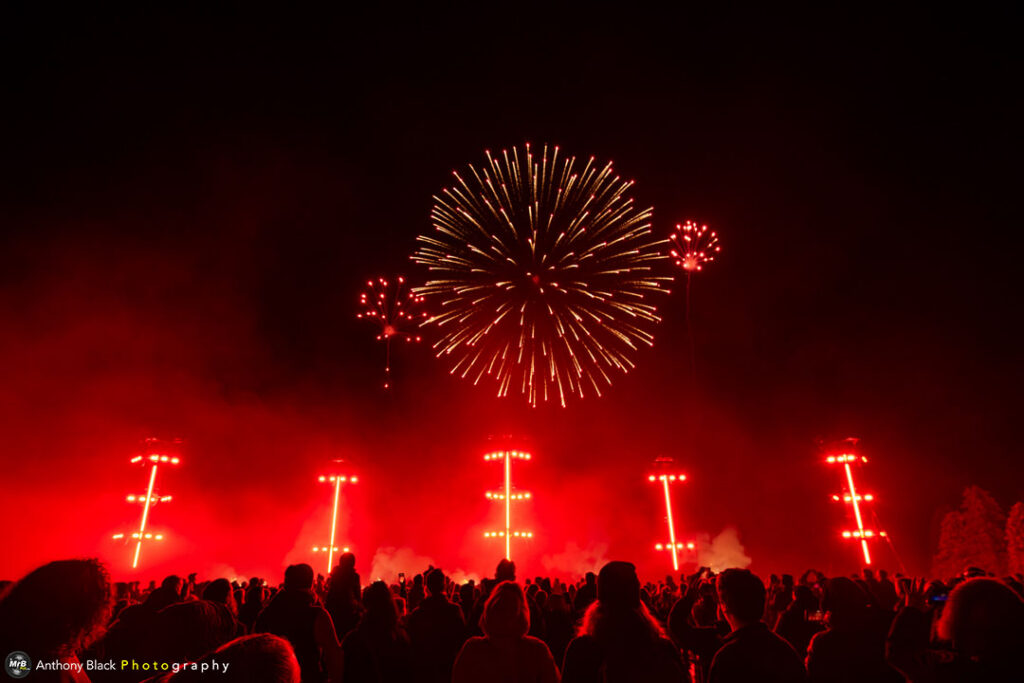
STAFFORDSHIRE, UK – Starting strong is good… but ending strong is what critics will always remember. Every performer recognizes that, so too do the creatives behind the wildly popular Alton Towers resort, which is why every November, they end their season with a bang (quite literally!) by staging a breathtaking fireworks extravaganza supported by an equally stunning light and laser show.
Of course, any phantastic ending must contain an element of surprise. (Who laughs at a punchline they already know!?) This is why Alton Towers adds a new twist to the fireworks spectacle every year, so even guests who attend the event repeatedly (as many do), are always delightfully surprised.
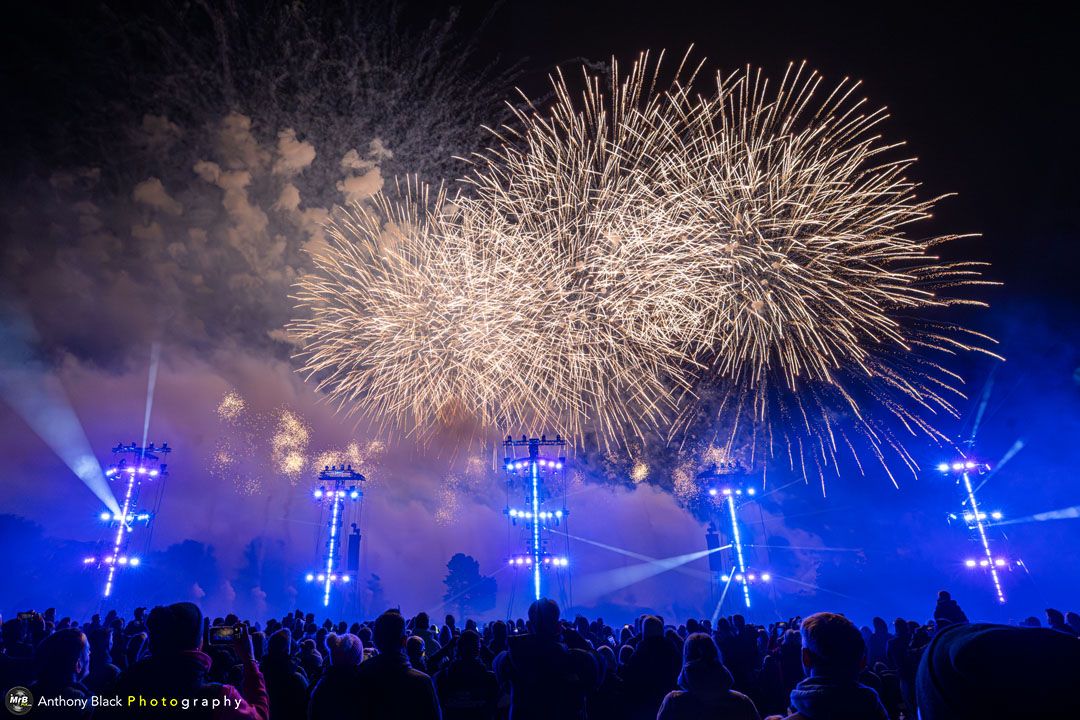
The 2025 edition of the three-day event was no exception. Built around the all-new story of “Alton Intelligence” this year’s 25-minute show, opened the doors of imagination to the fascinating, multi-dimensional world of AI. Making a key contribution to this year’s event was a brilliant light show designed by Olly Suckling, associate LD Martin Winton, and production manager John Slevin, that featured 187 CHAUVET Professional fixtures supplied by GLX Productions.
Run on two ChamSys MagicQ MQ250M Stadium Consoles, the show artfully merged lighting and lasers with the massive pyrotechnics to create an experience that immersed Alton Towers guests in the realm of AI.
Creating this powerful AI-infused imagery involved a great deal of collaboration on many levels, not the least of which was the rapport between Suckling and the GLX Productions team. Although Suckling has designed on many Alton Fireworks shows in the past, this was GLX Productions’ first go at the event.
Suckling and GLX have worked closely on many other projects in the past, and they drew on this experience to create an entirely new look for the 2025 Alton Towers fireworks show. “GLX was a fantastic collaborator,” said Suckling. “This was a new project with new challenges for them, but luckily they could draw on their experience working at other projects where the build took place whilst an event was open to the public — so they handled this one incredibly well.”
“Alton Towers lives in its own weather eco system as the park sits in a slight valley with a lake at the bottom,” said Suckling. “So, IP65 is an absolute must for this show as warm days and cold nights with high humidity mean fixtures end up sitting in cold and misty conditions.”
Elaborating on this point, Zak Nicholson of GLX noted: “Only buying IP has been a strategy for GLX for some time, as it gives us more flexibility in the solutions we offer to clients – plus, it just makes sense. A complete ChamSys control solution also makes sense in projects such as this one. We have a large number of ChamSys consoles, therefore when the GeNetix line was released it made sense to invest into the GeNetix nodes too.”
By using the GeNetix nodes to interface with MagicQ Suckling could see exactly what was going on in the network. He also loved the ability to save scenes directly to the nodes and then recall them remotely from the front panels. “This sped up testing by enabling us to deploy test patterns when testing the network and fault finding,” he explained “Is the issue the network between nodes or is the issue a bad cable downstream of the node? We could answer such questions quickly and simply.”
As for the fixtures in the kit, Suckling noted that given this year’s AI theme, it was essential for him to think carefully about his choices. His design featured five self-supporting 16-meter structures, representing “AI towers” staggered along the edge of the lake that was closest to the audience, along with fixtures on the far side of the lake where the fireworks were launched from.
Each of the towers was topped with Maverick Storm 1 Beam fixtures, which Suckling used to pump up the excitement level by creating towering columns of the light. He also added an extra dimension to the towers themselves by highlighting them with light from his Rogue Outcast IL Beam fixtures.
Suckling created a captivating sense of depth in the event’s staging area by coordinating backlighting from his Color STRIKE M fixtures with the firework launch positions. He also accented the evening’s laser shows by supporting them with colorful light from his COLORado PXL 16 Bar battens, which were position on suspended V-shaped trusses from each AI tower.
Blending this lighting with the breathtaking fireworks required an adroit balancing act in 2025 just as it does every year. “Selecting the lighting to compliment the fireworks always demands careful consideration,” said Suckling. “There are moments where the lighting shines or the laser or the fireworks take center stage — and then there are moments where they all come together to build those epic panoramas.”
Suckling, Winton, and the GLX team worked closely together to achieve such moments. The result was a seamless multi-dimensional show that gave guests something very special to remember as the Alton Towers season drew to a spectacular close.
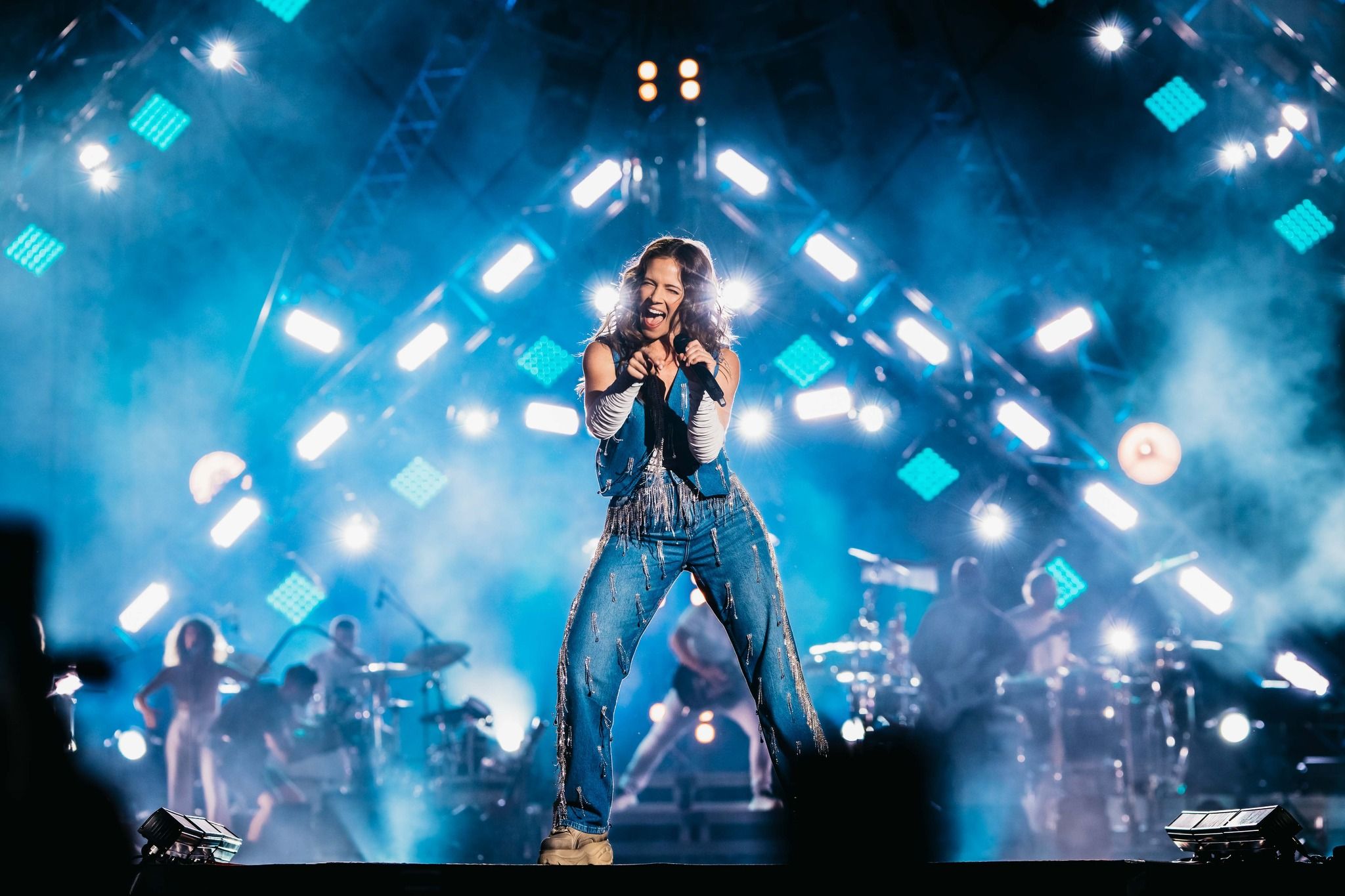
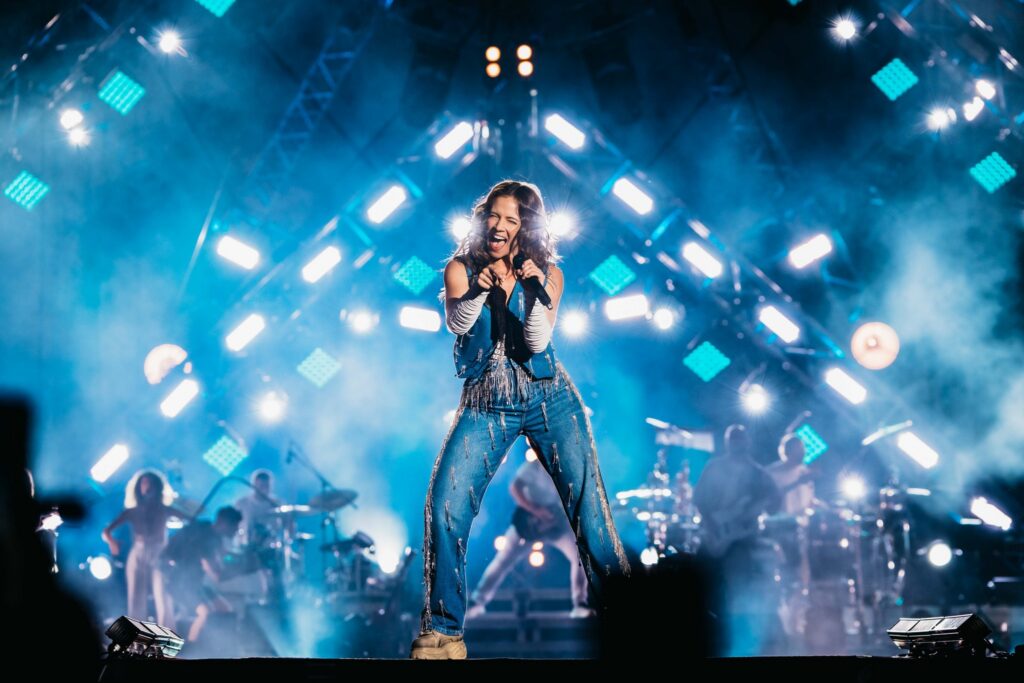
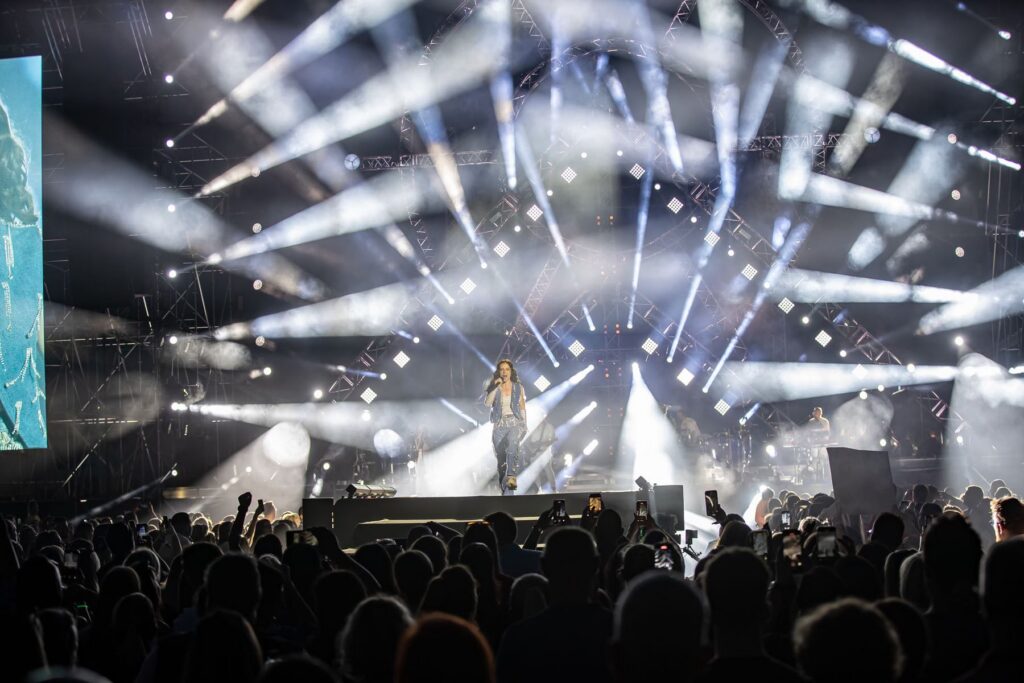
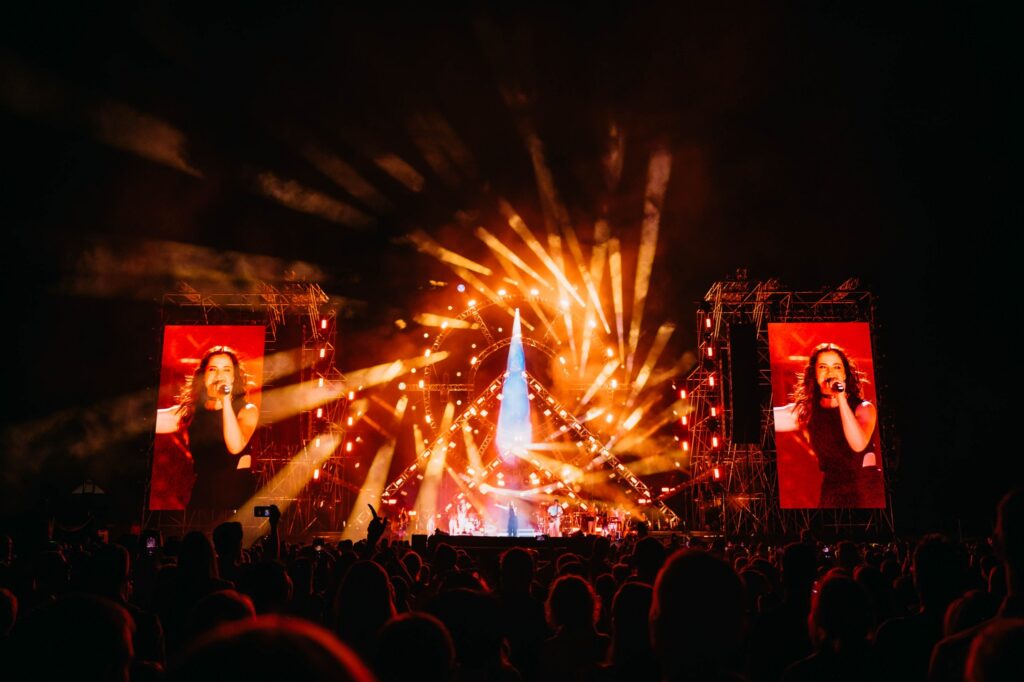
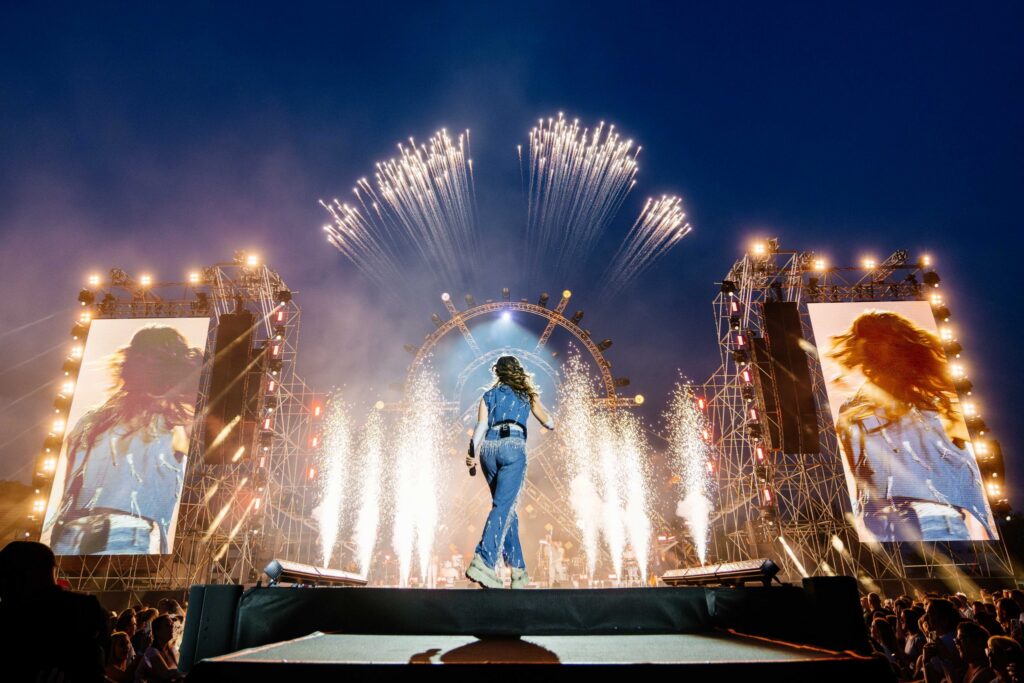
Ivancna Gorica, Slovenia – Her hits like “To Mi Je Vsec” and “Malo Malo,” which rode high on the charts for over 150 weeks,” achieved anthem-like status in Slovenia. She has sold out arenas. Her work has been universally hailed by critics for its style and power. Nina Puslar has indeed come a long way in her celebrated career.
Yet, the singer-songwriter never strayed far from her roots, which is why, when it came time to mark her 20th anniversary in the music business, she could think of no better place to celebrate the occasion than in her tiny hometown of Ivancna Gorica. Fans overflowed the local football field where the concert took place, many more of them than there are residents in this central Slovenian village.
No one in the big crowd was disappointed. Nina’s heartfelt performance was flawless. Supporting it was an appropriately artful Greta Godnic set design and a bold light show by Crt Birsa of Blackout Design that he ran on his ChamSys MagicQ Stadium Connect.
“The entire light show acted as an extension of Nina Pulsoar’s music from the intimate ballads to guitar riffs very close to rock music,” said Birsa. “My colleague at Blackout, Amadej Superger normally does shows for Nina. I had to scale his concepts. I took his colors, time code, cues and make them fit this particular event, remaking cues, and effects etc. This gave me an appreciation of MagicQ software and its flexibility. The ChamSys Group Cues was a really big help in this project. Actually, I cannot imagine program a show like this in the old ‘individual cues’ way.”
Birsa programmed the 36-universe show in his Blackout studio using a ChamSys desk and rand onsite with his MagicQ Stadium Connect. “The show was 95-percent pre-programmed,” he said. “There is no other way in modern productions with so many fixtures. It was pre-programmed in WYSIWYG, which really works well with ChamSys. Using focus points in Wyg helps a lot because you can transfer the pan/tilt information from WYSIWYG to ChamSys so you can spare quite some time when focusing lights.”
In addition to the Group Cues feature, Birsa found the Quick Editing feature in his MagicQ software especially helpful. “I relied on Quick Editing quite a bit for this show,” he said. “Really though, all of the MagicQ software features were very important for the fast and smooth workflow,” continued Birsa. “This is extra important in on projects like this one, where time is your biggest enemy no matter how early you start the pre-production.
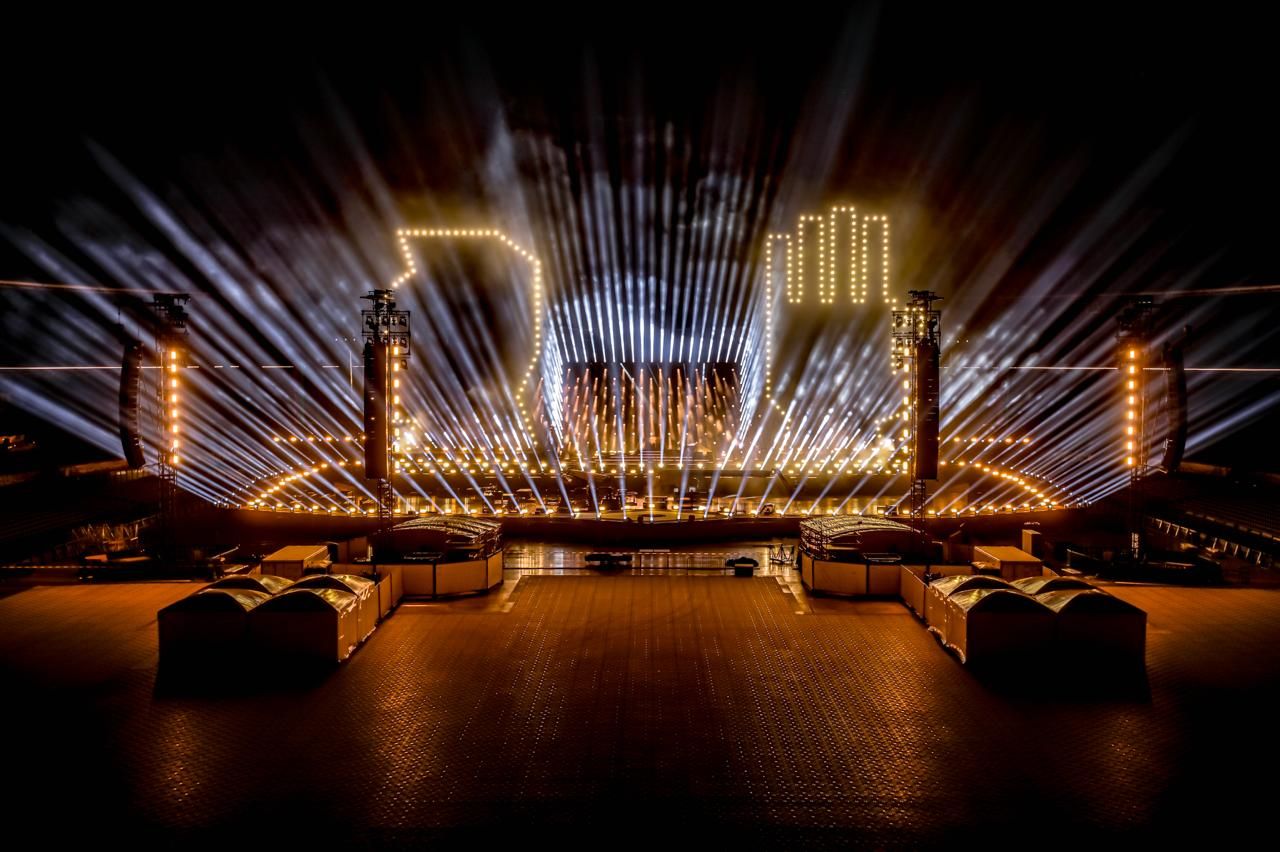
These tools served Birsa well, as did his colleagues on this project, who, in addition to set designer Godnic, included Klemen Krajnc of Blackout Design and production manager, Rok Lozar. Together, they created a spectacular show, with light emanating for circular and triangular truss structures heading out in every direction. The total look evoked images of endless possibilities and wrapped fans in a welcoming embrace, just like the music of this beloved star.
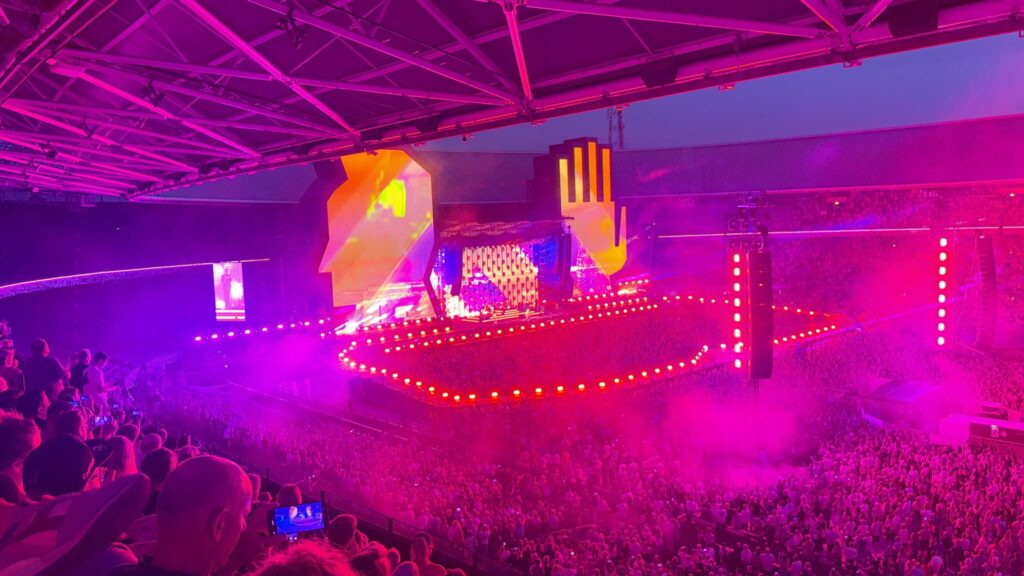
ROTTERDAM – A vast garden of great moments is always ready to blossom at a 25th anniversary celebration, especially when you’re talking about an iconic band like DI-RECT. That garden flowered abundantly for 50,000-plus fans at De Kuip Stadium for three nights this summer, as the band from The Hauge celebrated a quarter century of making music.
DI-RECT’s wide range of compelling music was there for every fan to enjoy, not only by listening, but watching as well. Like the band’s songs, the concert ‘s production was breathtakingly varied.
The show started with a soft, gentle mood, with lead vocalist Marcel Veenendaal and guitarist Frans “Spike” van Zoest performing on a diamond-shaped 360-stage. The show then moved to a full (non-360 stage), as the show amped up to included more symphonic parts with an orchestra on tiered risers backing the band, as well as a full-fledged rock show vibe with two towering video walls and beefy lighting rig.
Running this extraordinarily diverse panorama on five ChamSys MagicQ MQ500M Stadium consoles were Leon Driessen and his team at LD Company. Three of those consoles were used during previz — one for controlling a Disguise GX3 server for video, the two others for controlling lights in a multi-user environment.
“The ChamSys Multi-User function was great because we were able to program with two programmers in the same cue list as the same time,” said Driessen. “So basically, as one programmer was setting the look and feel in the cue list of the song, the other was programming the effects, highlights like build ups and drum riffs.
“Also, at some points, we programmed two songs at the same time in the same show file,” Driessen continued. “It was really invaluable that our ChamSys allowed us to connect multiple previz systems to the same show file.”
Once the design team was on site at De Kuip, they expanded their capabilities by bringing in two additional MQ500M units. These consoles were used to control the show’s extensive video element. (In addition to the two massive video walls, the production had video content running throughout the stage, often displayed on lighting fixtures.)
“We used the ChamSys DMX Merge feature to integrate all video content into the console from servers,” said Driessen. “In this case, we were able to map video across all washes and LED strips. Since all consoles acted in the same network, we could control all cues from the same main lighting desk and go to video and key lights.”
The show was programmed on timeline and hand cues. “Basically, each song was running on timeline, but the outros were by hand,” said Driessen. This provided the band with the opportunity to “expand the songs at the end,” he explained — and given the rich abundance of DI-RECT’s material, building onto each song came naturally.
LONDON –If you don’t like something, change it. If you can’t change it, laugh at it! Golden Globe and Prime Time Emmy Award winning comedian, Ricky Gervais is following this classic (and wise!) approach to human mortality in his aptly named “Mortality Tour,” which kicked off last year, and runs through the end of 2025.
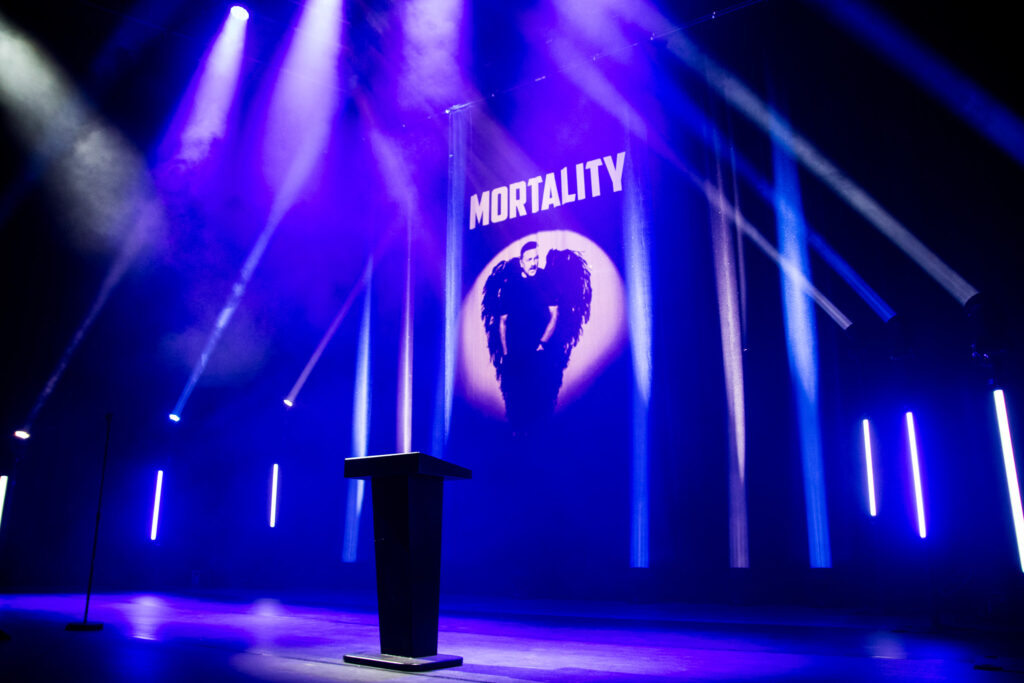
“We’re all going to die, may as well have a laugh about it,” Gervais said when announcing his global tour. And that’s precisely what the Reading-born comic is doing on the tour with his delightful mix of pithy, irreverent, and always-insightful humor. Providing a supportive backdrop for the star comic’s performance is a production designed by Rod Clay of Absorb Media Ltd, working closely with production manager, Adam Scott.
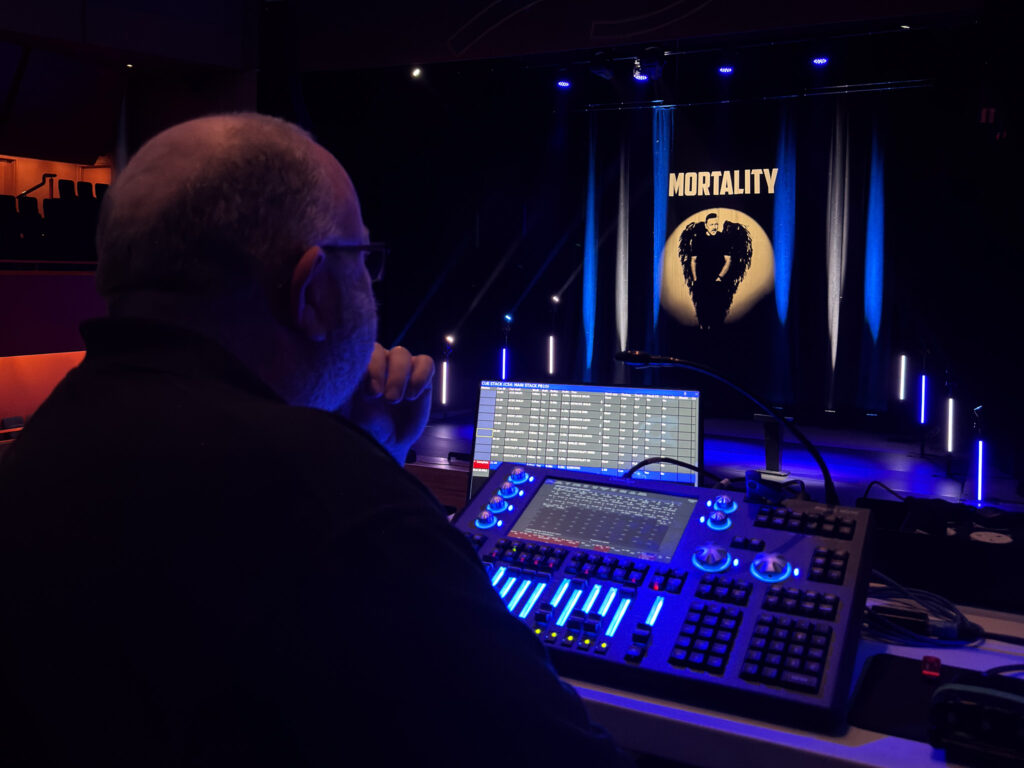
Clay is running the theatre leg of the Mortality Tour with a ChamSys MagicQ MQ70 Compact Console, along with a Compact Connect control service as his wing. “There is limited FOH space at the theatres, so the ChamSys Compact series was the obvious choice,” he explained. “The shows are always sold-out, so space is at a premium.
“Aside from saving us space and giving us a lot of power relative to its footprint, the ChamSys is easy to load in and out,” continued Clay. “That’s very important, as the turn around on the show is fairly tight. We arrive early morning and load in. The tech run is at 5pm, then Ricky arrives 6pm, and does his checks. The show opens at 7pm and the next thing you know we are loading out.”
Given the show’s busy touring schedule, Clay appreciates being able to work and tweak the show on his ChamSys system whilst traveling. “It’s a massive benefit,” he declared. “I work with our team on feedback on previous shows so we can always improve. I do Vis drawing and WYG files and share them with our great tour rigger, John Ashton”
Clay and the production team strive to keep the same look throughout the theater leg of the show from one venue to the next. Helping in this regard is his console’s Morphing Head feature, which makes it easy for him to work with different house rig fixtures on the global tour whilst still keeping his programming. He can also edit his morphed file to account for variations in things like color rendering from fixture to fixtures.
The intuitive features of his ChamSys are also making it easy for Clay to experiment with different ideas during the tour. Among his more inspired concepts was to over lap gobos to create the captivating effect of a projection video. He also keeps much of the stage dark but relies on audience lighting to ensure that Gervais can see his fans.
“For us, the best outcome is when Ricky walks out, loves our work and says ‘Yes,” remarked Clay. Following this formula, the tour is providing fans with an experience they’re likely to remember for the rest of their lives. And even with “Mortality” that should be a very long time, indeed.
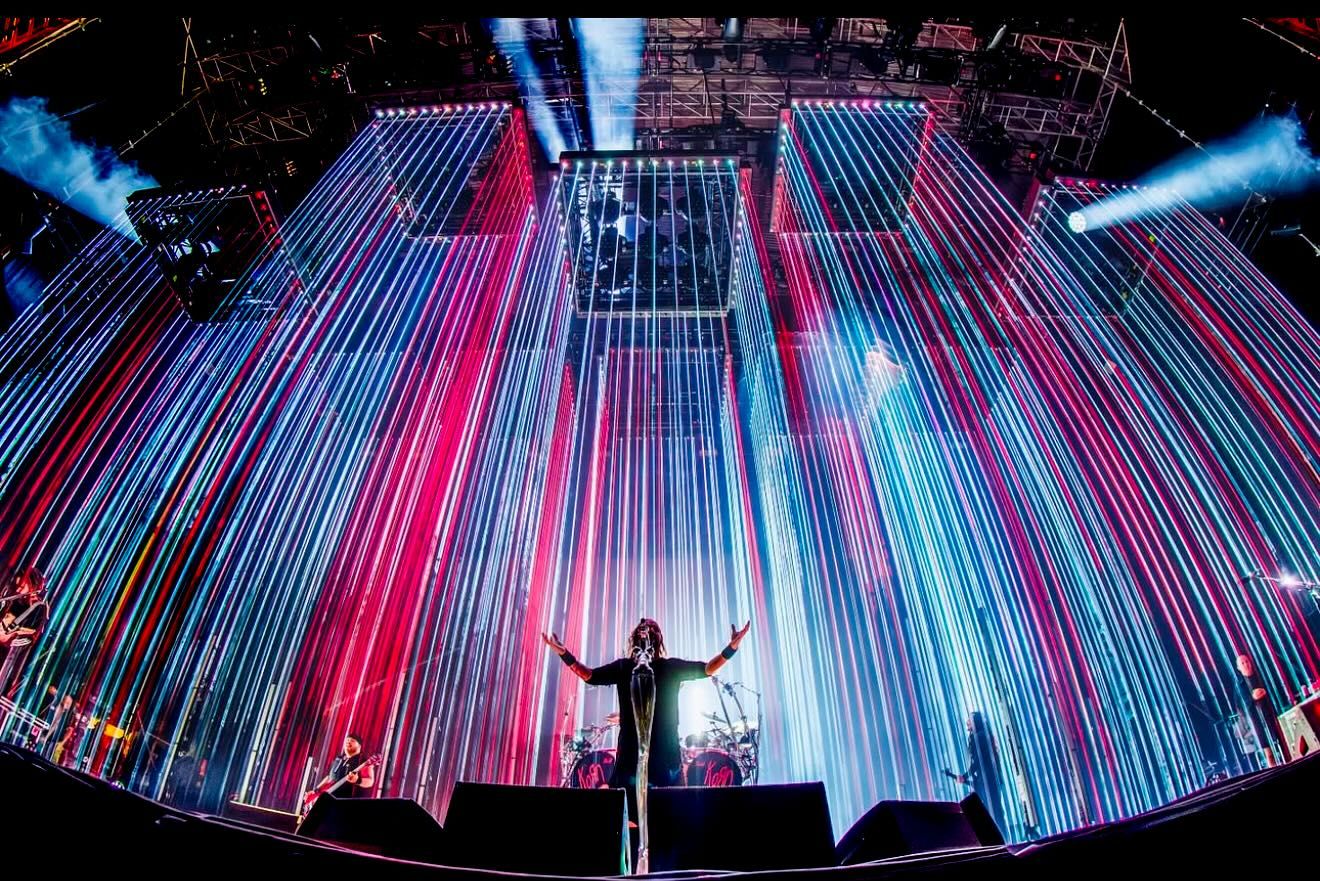
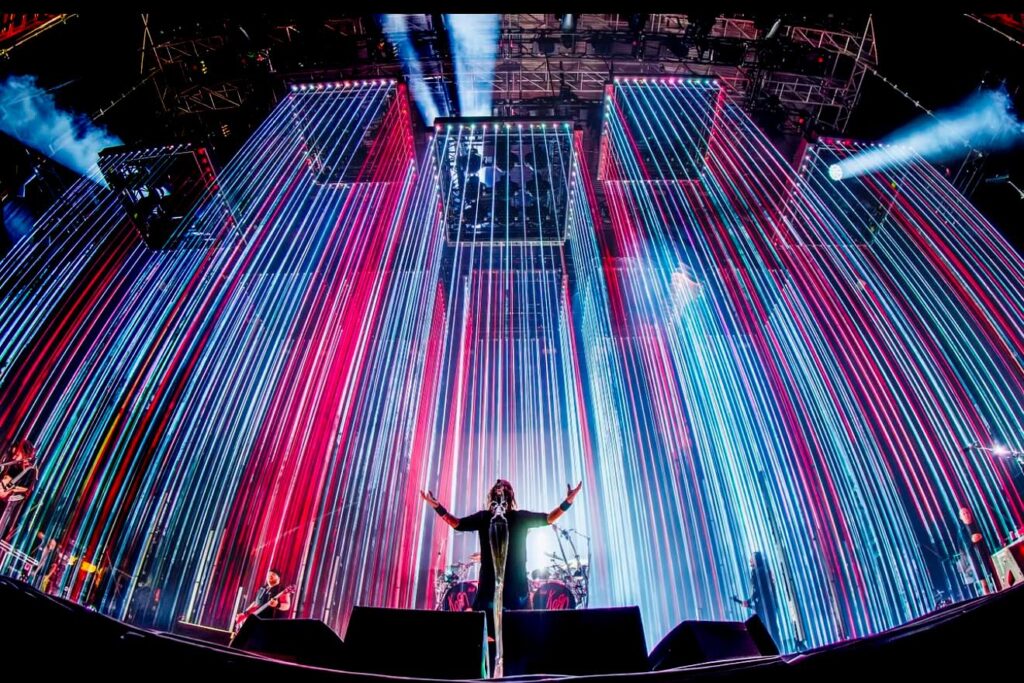
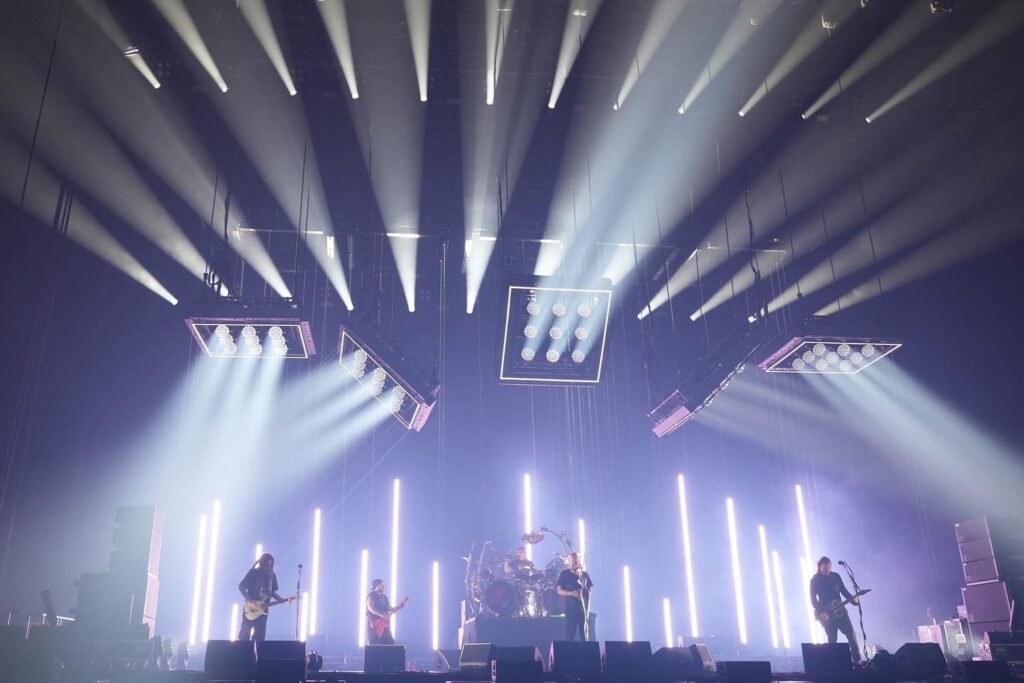
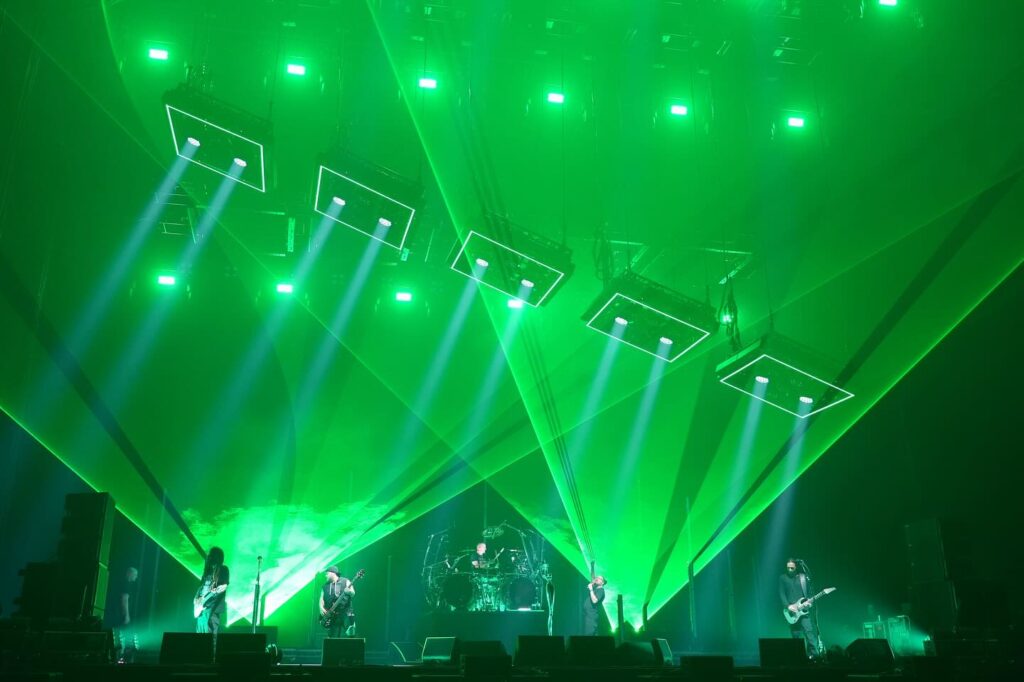
HAMBURG – What you see is not always what it appears to be. This timeless reality check can make things a bit uncertain at times, but on the flip side, it can also lead to some wonderfully surprising moments. Such was the case with the production design that Rob Lister and his team at IYA created for the recently completed KORN world tour.
With its towering trim and floating automated light pods, the tour’s production immersed and captivated fans on a multitude of levels, but though the show was majestic, the underlying lighting element behind it was straightforward, according to Thomas “Church” Christmann of CycoVision.
Christmann was in a great position to know– he was the programmer and LD for the tour, powering his show with a ChamSys MagicQ MQ500M+ Stadium console. “Rob and the IYA team did an incredible job,” he said. “They gave me all the freedom to program the show throughout, which was great fun. As for the basic structure of the show, in terms of lighting, it was straight and basic. However, with all the lasers and pixel lines involved, the end result was actually very complex. We did a great deal of video mapping on the lighting fixtures.”
Often running lighting fixtures as video surfaces and using his PRG-supplied lighting rig to run through myriad colors and beam angles Christmann conjured up deeply evocative looks that belied the relatively limited number of fixtures in the production.
“So, the show itself , if you’re talking about just our setup, was over 100 universes, which may sound weird, because we weren’t using that much equipment,” he explained. “However, we were doing a lot of video mapping, and all these fixtures were in the highest mode so we could have the best pixel pitch on them. We wanted to map every pixel they provided. This ate up a lot of universes, because I merged the server universes in my ChamSys console to the fixtures. So, that kind of doubled up the universes we used.
“The lasers in our rig also used a lot of universes per unit,” continued Christmann. “There were six lasers-outs per stick and eight laser bars per pod. In total it was about 400 Laser outputs. So that gave us another 40 universes. But considering everything together it was about 125 universes plus the local universes. I also left 100 universes open for festivals. You never know these festivals kind of go crazy sometimes, so I want to have enough spare universes.”
Given the number of universes his rig demanded, Christmann was happy to have a powerful console like the MagicQ MQ500M+ at his disposal. “Capacity was the most important thing to me,” he said. “I had 400 DMX universes output out of the box for the production. So, it was easy for me to set ranges and put everything so far away without any trouble. I had to work with all the different house rigs on the tour, some of which could be quite large. I could go very big in terms of universes and keep my patch and build clean and easy.
“We ran two different protocols: Art-Net and sACN, continued Christmann. “In the end, I was connected to lighting, the lasers and video, because the video got merged in my console. There were 40-watt lasers on the floor that I was controlling over the Pangolin system. I was still connected to the console, which was running the laser batten because there must be a laser tech with the right knowledge, since the lasers are so strong.”
Christmann preprogrammed all the basics of his show with Visualizer beforehand, and then had a couple of rehearsal days with just the floor package on the eve of the tour. “I just had the rest of the lights on my Visualiser at that point,’ he said. ‘That worked well with ChamSys because it supports all the Art-Net or sACN outputs. I can do this right out of the box — no surfaces necessary.”
Although the show was preprogrammed (but not timecoded), Christmann lent his widely celebrated busking skills to every song at various points, infusing them with a greater sense of spontaneity. The user-friendly nature of his console was greatly appreciated at these moments.
“A big reason why I like to work with this console is because it is so intuitive,” he said. It’s always easy to go from A to B. I started to change my shows into group cues. So every time something changed, I just changed my group and it worked. Also, bringing the lights from the festival rigs into my show was super simple. I just morphed or created new groups.”
Of course, there was much more than a man and his machine behind this show. Teamwork with talented collaborators was also critically important. Preproduction support by Stefan Gunkel played a big role, as did the work of TM Matt Peloquin; PM Syrus Peters and production assistant Talena Rose; Stage Manager Danny Monsees and assistant Jake Hogeland; LX Crew Chief Greg Nunz with crew Jason Henry, Olu Kiara and Eddi Viveros; laser operator Eric Baum and tech Chad Timinskis; and video operator Marco Hernandez.
Having so many people involved behind the scenes in a show might have been a surprise to many fans who could have felt that the smoothly run production just happened by itself. But then, as this tour demonstrated, things are not always exactly what they seem.
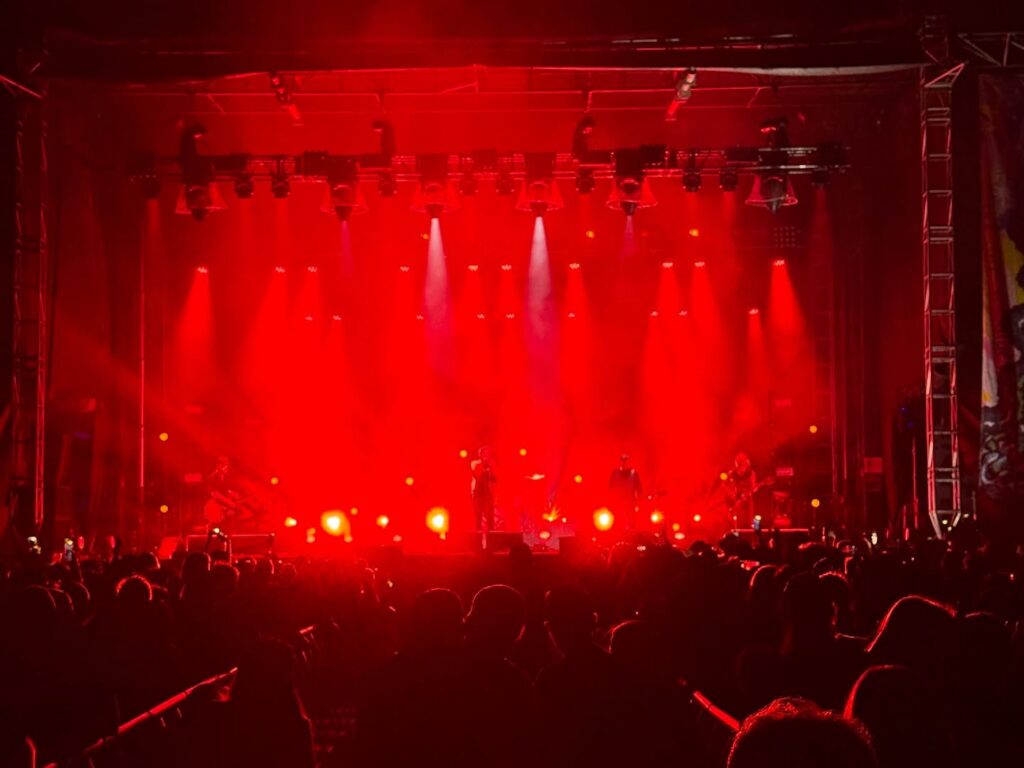
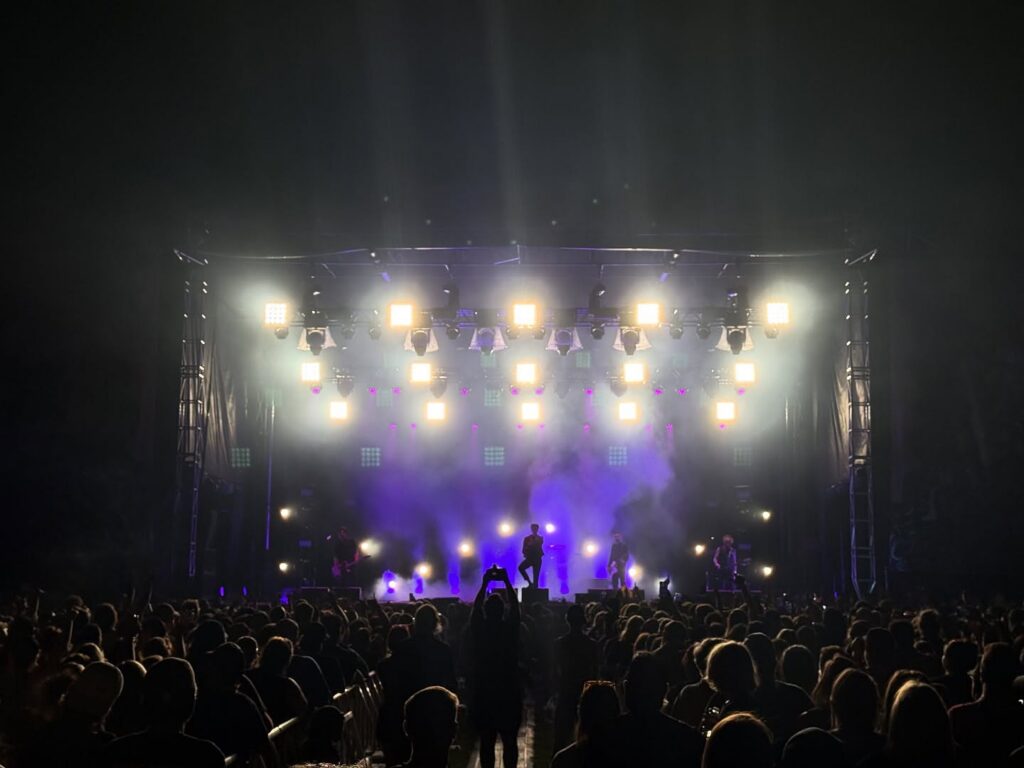
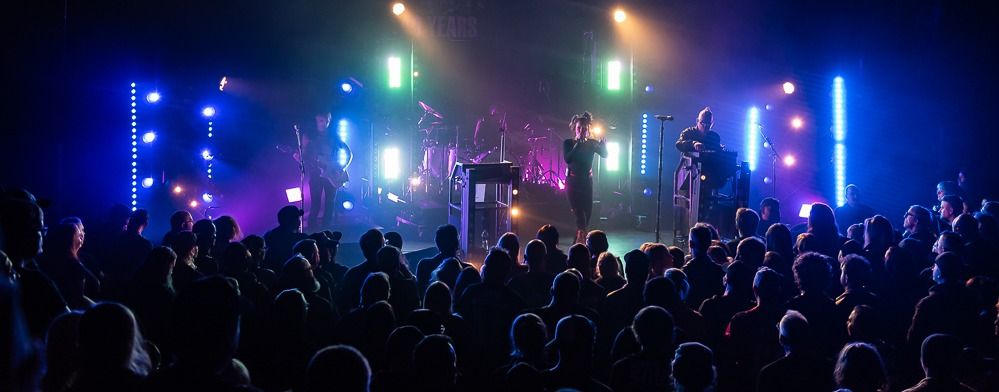
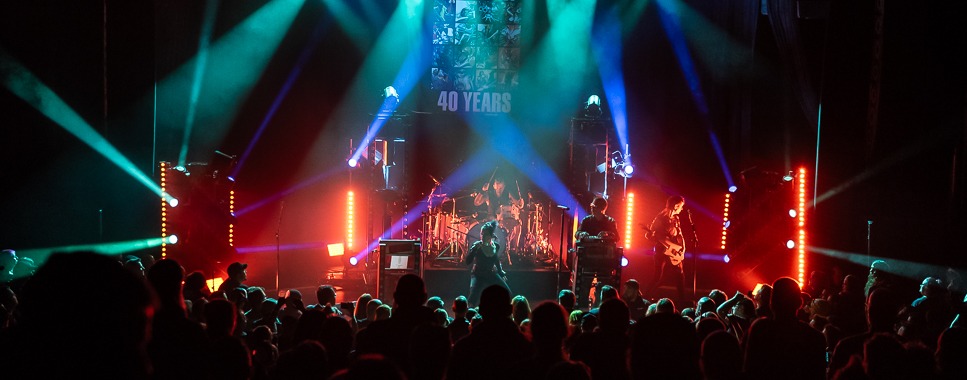
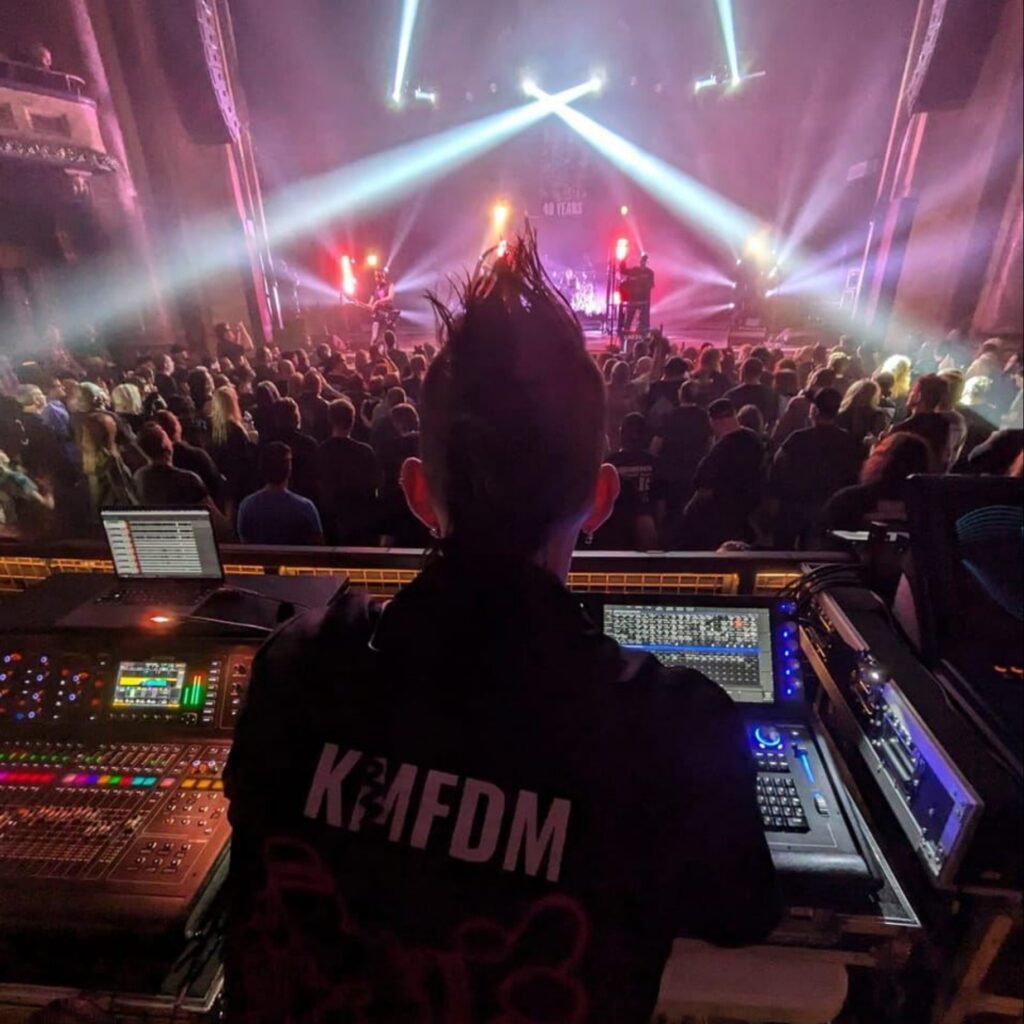
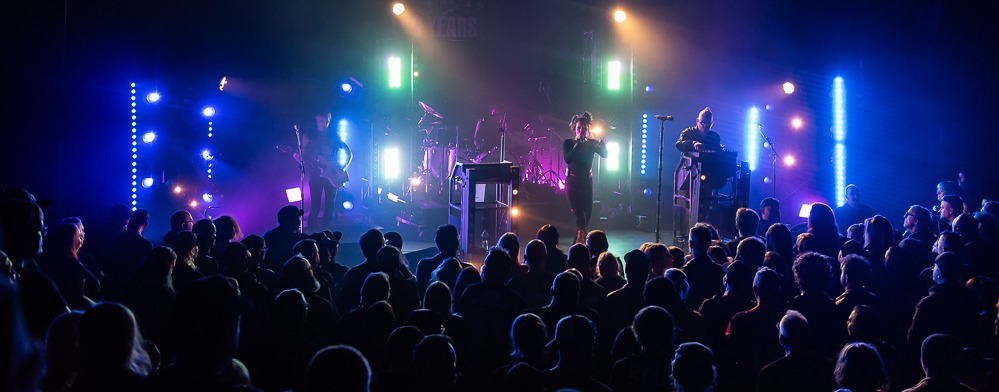
NEW YORK – It isn’t simply what you see, but what you feel like you’re seeing that creates the kind of transcendent experience that takes a lighting design to the next level. James McKenna created just such a design for KMFDM on the multi-national industrial rock icons 15-city USA tour.
For starters there was some arresting imagery that evoked the feeling of an automation effect, with dramatic 3D-like movements. McKenna created this magic, not with automations, but by displaying overlapping effects through his strobe-hybrids, controlling them with a ChamSys MagicQ MQ500M Stadium Console, which like his entire rig, was supplied by R90 Lighting.
“Every fixture on this design was pixel mapped in my ChamSys desk,” said McKenna. “The automation effect or glitching that people see in the backdrop is a result of running effects through the Pixel Mapper. Additionally, to make it super glitchy, I’ll add the strobe from the pixel mapper into it. This seems to cause it to wig out in a fun way that looks like malfunctioning video screens in a sci fi flick.”
McKenna extended this mesmerizing sense of motion beyond his backdrop and sprinkled it throughout his entire design, which featured a heavy representation of vertically oriented fixtures. “It’s easier to pixel map with the vertical fixtures,” he explained. “But honestly, the primary reason, is mobility. The entire rig has to break down and pack in a 16-foot trailer along with the backline and merch. Pipe and base is quick and dirty and with everything on wheels, having a couple pipes on wheels meant I only had a single column mount point. So, vertical was the way to go.”
Mobility was not the only priority for McKenna on this tour. He also needed a high degree of flexibility, as he had to adapt to a different set list every night with scant advance notice. He lit 15 shows on the tour, each one drawing on a library of 40 different songs, with no set ever repeated.
“I would learn of the set during sound check around 4pm the night of the show,” he said. “This left me about two hours before doors to touch up programming for the selected tracks of the night. It created for some nail biting on occasion. Additionally, when we left for the tour, I had only programmed 16 of the tracks due to time constraints, so I was having to program the remaining tracks during the drives.”
“It was stressful at times,” continued McKenna. “The biggest challenge was adapting the show to each venue’s house rig on the fly. When I initially programmed the show in Capture, I added a number of “house rig” fixtures to program in as well. This show was the first time I’ve really utilized the Group Cues feature in ChamSys, which made expanding and adapting my show on the fly a breeze for the most part.”
This feature allowed McKenna to make his show larger each night than he would have been able to do had he been required to build the rig and then program in the house rig each night. Instead of working through this time-consuming process, he was able to clone/morph, and simply set positions and set focuses for gobos and other effects.
About 40-percent of McKenna’s show was of busked. The rest was run cue to cue using his ChamSys console’s Cue Stacks. “I had my upper bank flash keys as well as the 12-key Execute Keys as flash keys, so I could hit a number of effects on the fly,” he said. “I set base looks for the songs (intro, verse, chorus, bridge, etc.). Then I assigned lights to synth lines or other stand-out elements of songs — and then triggered those live as they happened. I get bored easily, so I always need to do something. I refuse to timecode the show. I make it more complicated than it needs to be, but I find it enjoyable to play along with the songs. I think it adds a live element as well. Time code shows are too perfect. The band is playing live, and I feel the show should reflect that as well.”
McKenna found the Group Cues and Group Grids on his MQ500M especially valuable on this tour. He says that The Group Cues made expanding and morphing his show “a breeze.” As for the Group Grids, he notes that they “made pixel mapping even easier. I didn’t have to stop to fine tune my Pixel Mapper FX to try and match the BPM; instead, I could actually assign it a time via the FX engine.”
A self-described “button masher,” McKenna relished working the buttons on his user-friendly console. “I can’t play an instrument,” he acknowledged. “But I can mash buttons in time, so close enough, right? The MQ500M has plenty of buttons for me to assign things to for future mashing purposes.”
Deftly mashing those buttons, McKenna played his “instrument” to perfection. In so doing, he created a lightshow that, like the music of his clients, created a magical experience by defying expectations.
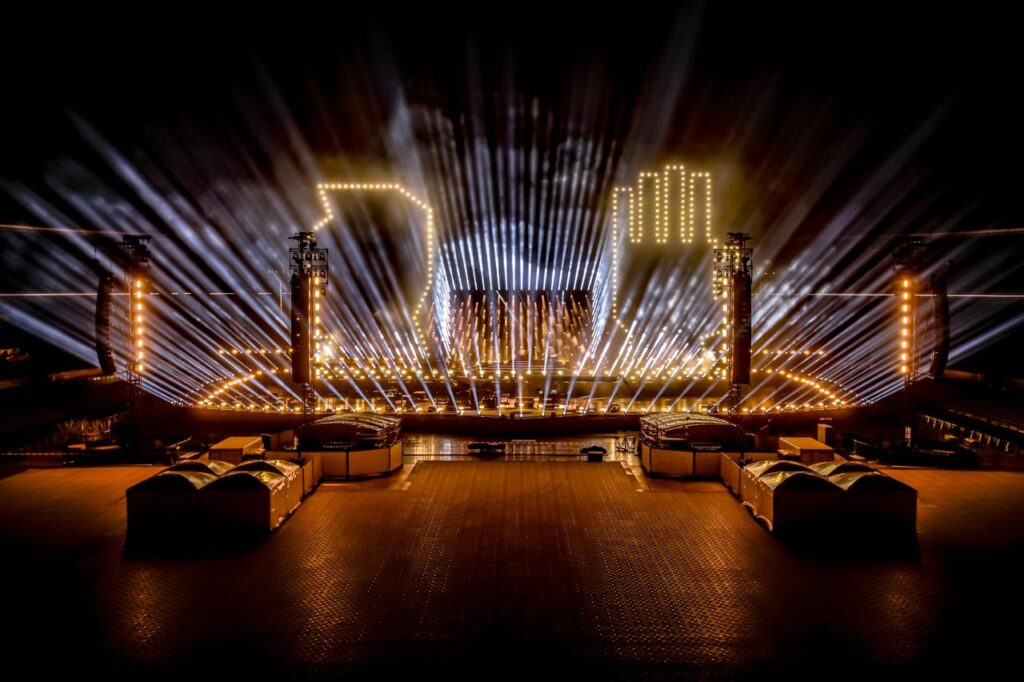
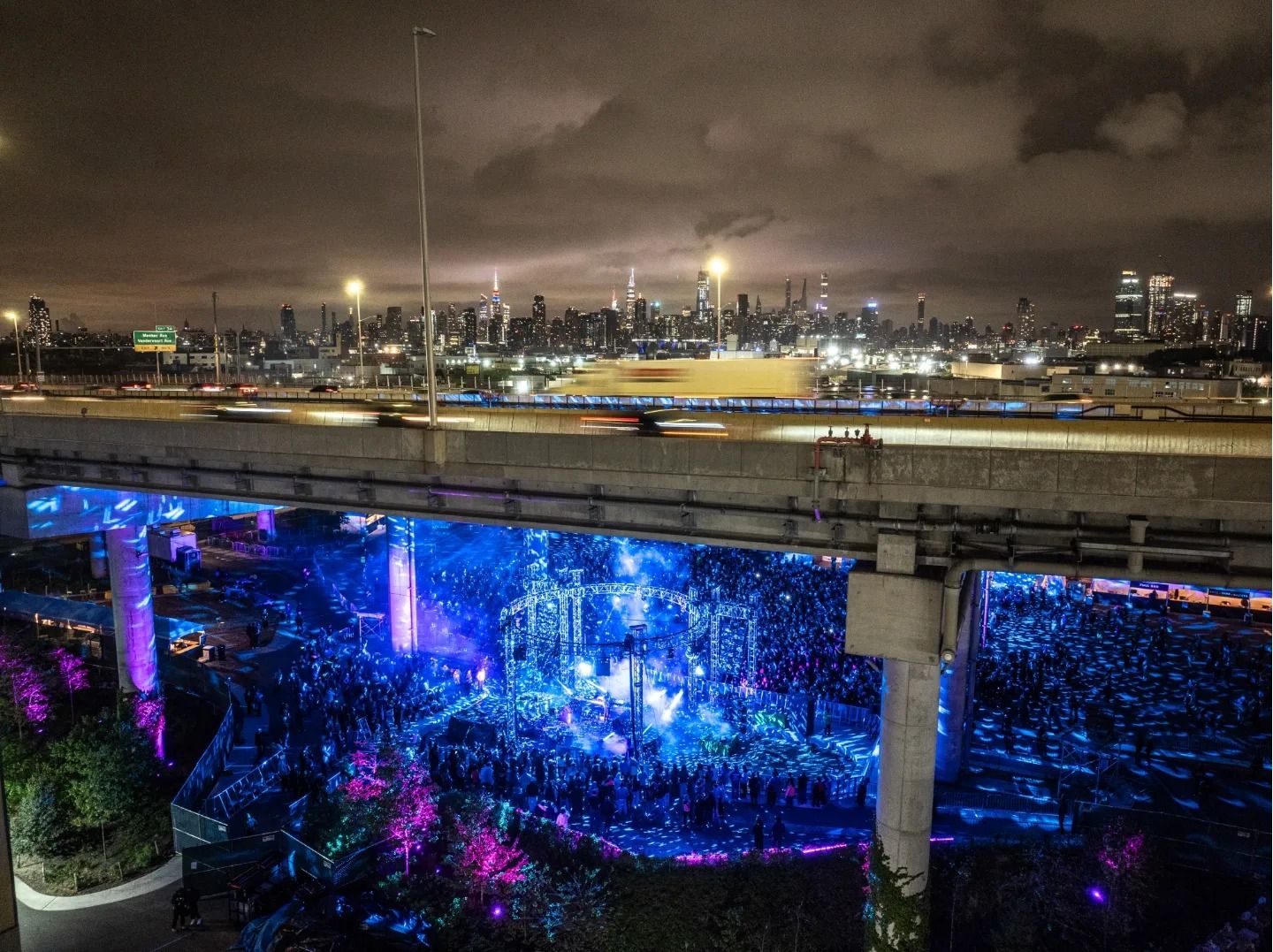
BROOKLYN, NY – Ed Warren could see that the fans in front of him were really tuned into the two Four Tet shows he lit in Brooklyn at the start of this summer.
That was a given. Less certain though, was whether or not the people above the acclaimed British lighting designer had any idea what he or his famous client were doing! That’s because Four Tet and Warren were 100-feet below the long and very busy Kosciuszko Bridge (affectionately known as the “K Bridge”) when they were busy doing what they love – and are really good at.
“I must admit, it was different doing a show underneath such a busy overpass,” said Warren. “We really couldn’t tell at all what was going on above us. I wonder if anyone above could tell what was going on with us below?”
Given the height and design of the much traversed (34,000 vehicles a day) bridge, that connects parts of Brooklyn and Queens, those passing overhead were oblivious to what Warren and his friends were up to down below in the recently opened K Bridge Park.
Such a shame! Since the two-day festival featured a brilliant mix of EDM music in all its glorious forms by Four Tet and twenty artists he selected to be a part of his curated event.
Warren lit Four Tet’s two main stage sets – one on Saturday late, the other Sunday afternoon into evening, using his ChamSys MagicQ MQ500M Stadium Console.
Shawn Bunch and Rishi Guinness ran the other shows on MagicQ MQ-80 Compact Lighting Consoles with Wings, while See Factor’s Alban Sardzinski handled production on the B stage. All the consoles at the festival, as well as the lighting rig, were supplied by See Factor, working with Highlt PDS (design and drafting studio) GreeNow (power and generators) Firehouse Productions (Flex one audio), and Gravity Productions (festival production management).
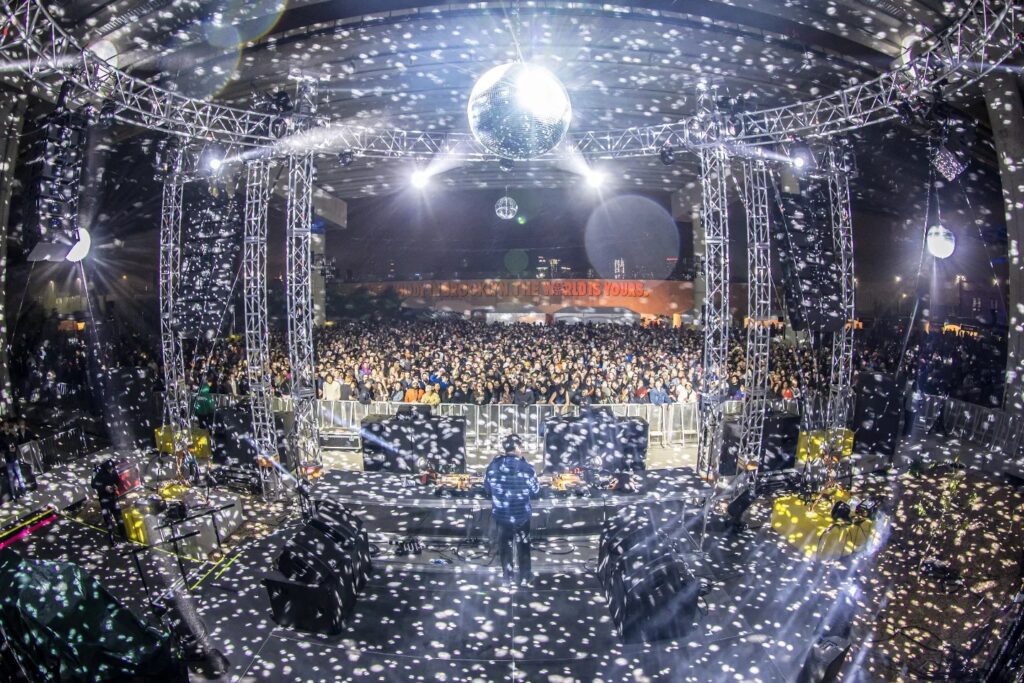
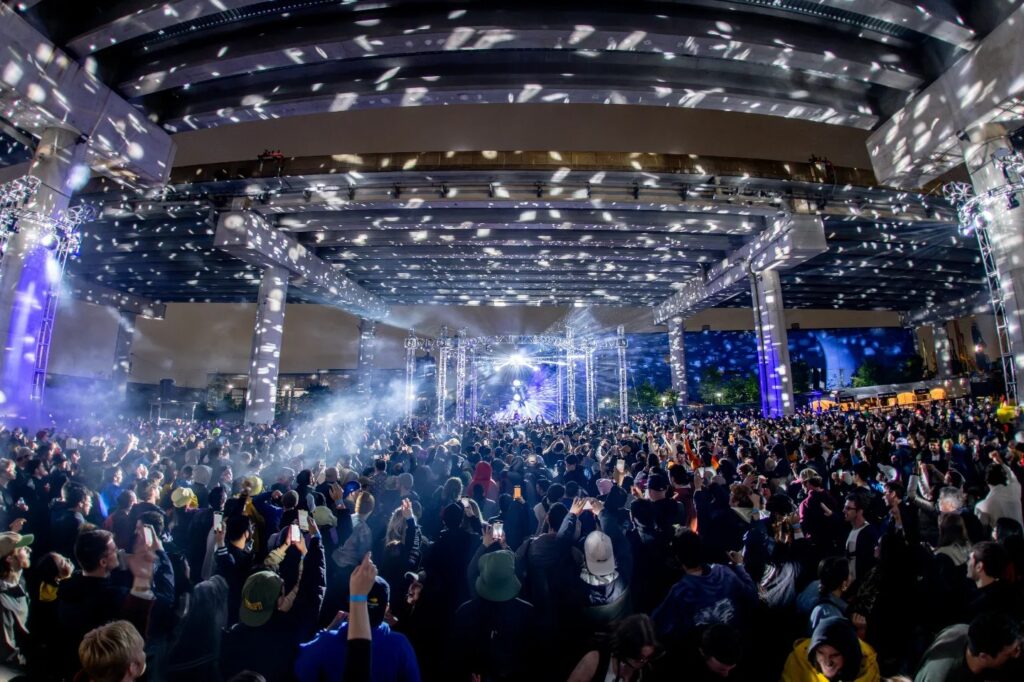
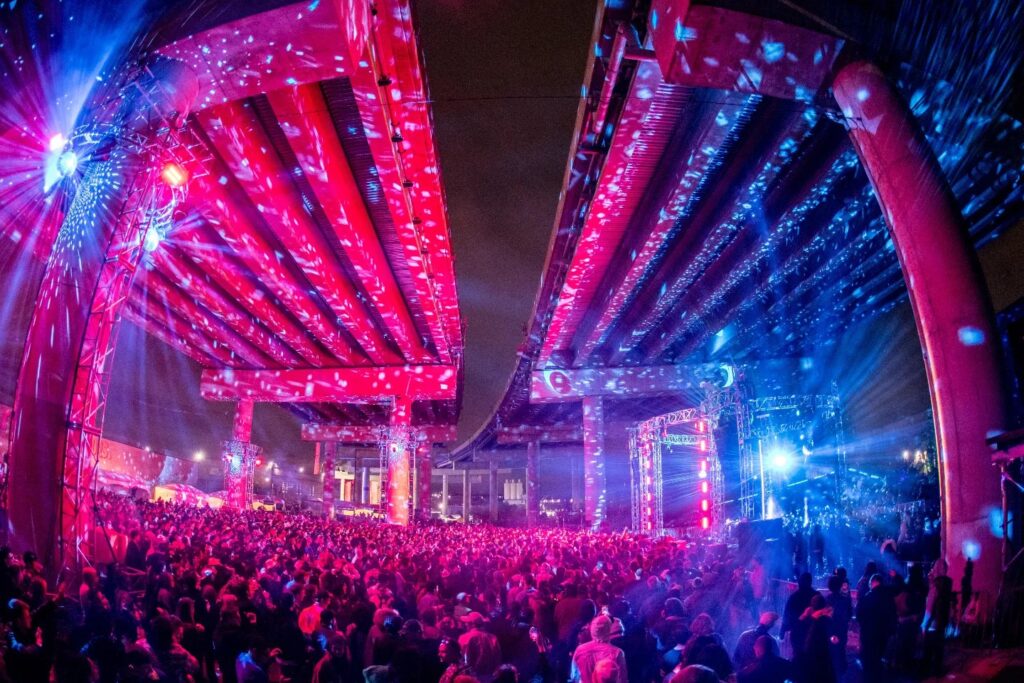
For the Four Tet show that he designed, Warren turned the park under the double-spanned bridge into kaleidoscopic wonderland of rapidly-moving reflective light and gobo patterns right there in a converted industrial site at the border of two New York boroughs.
As is his custom, Warren made mirror balls an integral part of this design. “We had four mirror balls positioned around the circular truss above the stage,” he said. “There were also four pillars holding up the bridge. We rigged circular trusses around them as well, so in total we had eight above the dancefloor and four above the stage.”
As for the gobo looks that were so exciting in his show, Warren noted: “I don’t often use them much, but they were a good way to break up the show a little. We called upon them at the more relaxed gentle parts of the set before it went hard again – ‘Recovery Gobos,’ if you will.”
In addition to the intuitive, user-friendly layout of his ChamSys console and its step-saving Timeline feature, Warren found the Group FX feature to be particularly important at Under The K Bridge.
“I used a Show File from a previous Four Tet show with a not too dissimilar setup, so Group Cues and Group FX made changing the show to this configuration go very smoothly. Absolutely, without a doubt, with Group Cues, moving from one show to another has never been easier!”
Looking at the overall show, See Factor’s Alban Sardzinski said: “This was a very unique canvas to work with. It allowed some incredible looks to be created. The ability with ChamSys to busk fast, and drive 90 pixel bars and lights without limitations was a big contributor the making this a special event for everyone.”
Change Location
Find awesome listings near you!
We use cookies to ensure that we give you the best experience on our website. If you continue to use this site we will assume that you are happy with it.